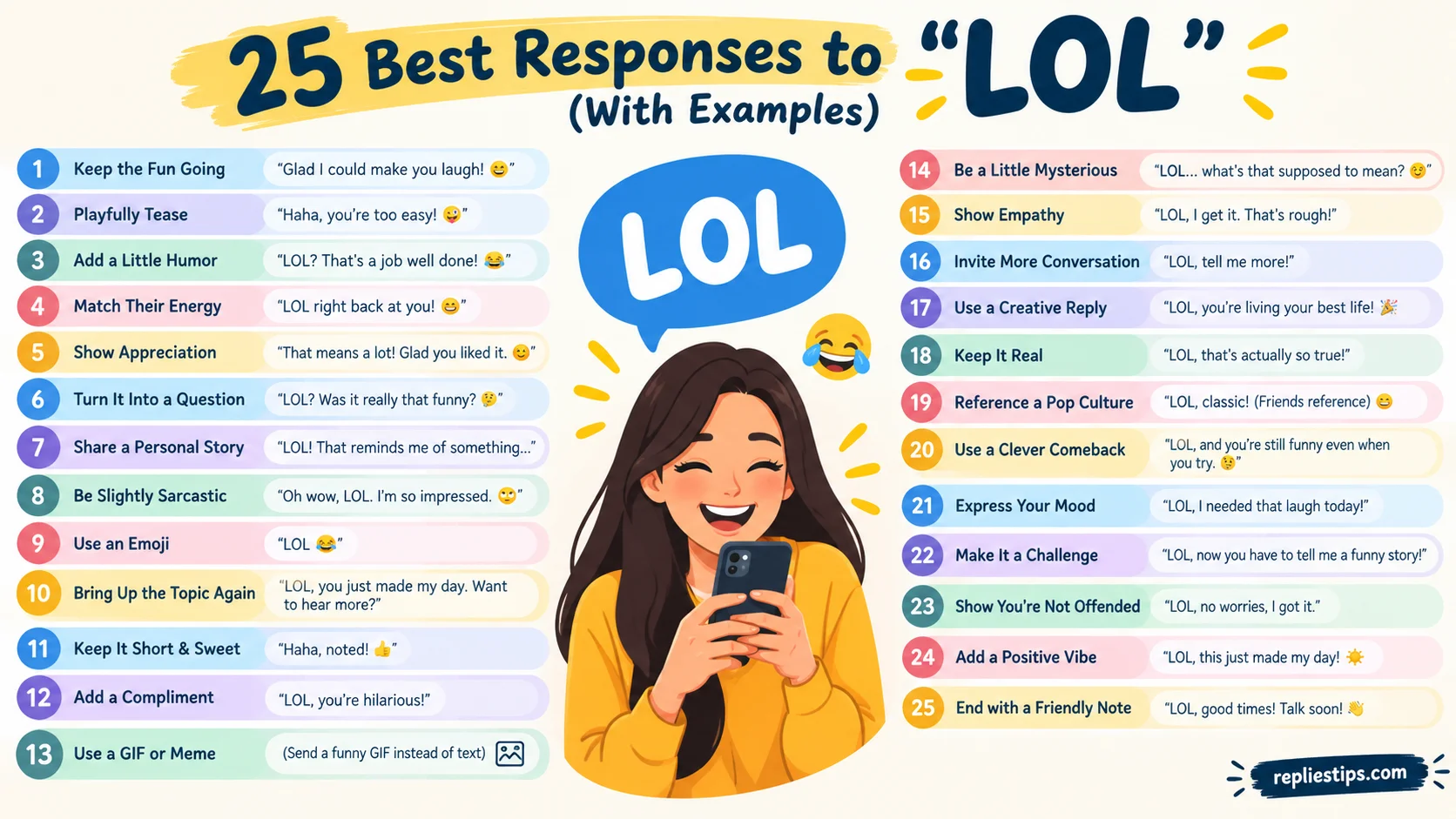
Best Responses to “LOL” (With Examples) can help you keep the chat going when someone sends a quick message like LOL. If you feel stuck about how to type back, choose a funny reply that keeps the chat flowing and avoids weird pauses or awkward vibes. When someone genuinely found your message funny, continue the conversation with something funny, jokes, or teasing. A simple LOL may be a quick habit, so understanding its real meaning can help you choose the right response and keep your talks flowing naturally.
In texting, your reply to LOL should match the person and situation. With a friend, family, or coworker, try clever joke ideas that feel natural, engaging, and memorable. When flirting with someone you like, you can tease or flirt with a playful response. If the other person seems dry or confusing, do not force the conversation alive. Instead, use best comebacks or responses to LOL that fit the moment. You can also turn an embarrassing story or funny message into more laughter, or end the chat naturally when the texting situation calls for it.
1. “Glad I Made You Laugh”
Sometimes the simplest response is the most natural. Saying “Glad I made you laugh” works especially well when you want to acknowledge the other person’s reaction without making the conversation complicated. It sounds confident, friendly, and positive. This response also shows that you noticed their laugh and appreciate it, which can make the exchange feel more personal. You can use it after telling a joke, sharing a funny story, or sending something amusing. If you are talking to someone you do not know very well, this is also a safe option because it does not sound overly familiar or flirtatious.
Meaning: You are happy that your message made them laugh.
Tone: Friendly, warm, and confident.
Example:
Them: “LOL 😂”
You: “Glad I made you laugh!”
Best Use: Use this when you want to keep the conversation positive and easygoing.
2. “I’m Here All Week”
If you want a funny response to LOL, “I’m here all week” is a classic playful choice. It jokingly makes you sound like a comedian who has just finished a performance. The humor comes from pretending that your joke was part of a professional comedy show. This response works particularly well when you have just delivered a clever punchline and the other person responds with “LOL.” It keeps the interaction light without requiring a serious answer. You can make it even more entertaining by adding something like “Tip your server” or “Don’t forget to leave a review.”
Meaning: You are jokingly presenting yourself as a professional comedian.
Tone: Playful, confident, and humorous.
Example:
Them: “LOL, that was actually funny.”
You: “I’m here all week. Try the veal.”
Best Use: Use it after a successful joke when you want to continue the comedy.
3. “You’re Welcome”
A playful “You’re welcome” can turn a basic LOL into another joke. Instead of simply accepting their laughter, you pretend that making them laugh was a service you provided. This works best when the conversation is already casual and both people are comfortable joking around. The humor comes from treating their laugh as though they owe you thanks. It can sound confident without being too serious. If you want to make it more dramatic, you can say, “You’re welcome. I accept applause too.” The key is to keep the delivery obviously playful.
Meaning: You are jokingly taking credit for making them laugh.
Tone: Funny, confident, and slightly cheeky.
Example:
Them: “LOL!”
You: “You’re welcome. I’ll be signing autographs later.”
Best Use: Use it with friends or someone who enjoys playful banter.
4. “That’s the Reaction I Wanted”
When you intentionally send something funny, “That’s the reaction I wanted” is a confident way to respond to LOL. It shows that you knew your message would get a laugh and that the reaction confirms your plan worked. This response can make you sound self-assured without becoming arrogant. It is particularly useful when you have been teasing someone or telling a joke. The phrase can also encourage the other person to continue engaging because it naturally leaves room for another message. You can follow it with another funny comment to keep the conversation moving.
Meaning: Your goal was to make them laugh, and you succeeded.
Tone: Confident, playful, and relaxed.
Example:
Them: “LOL 😂”
You: “That’s the reaction I wanted.”
Best Use: Use this when your original message was deliberately funny.
5. “Wait, You Actually Found That Funny?”
This is a great choice when you want to sound playfully surprised by their reaction. Instead of simply responding to LOL, you pretend that you did not expect them to laugh. That creates another opportunity for humor. The phrase can also invite the other person to explain what they found funny, which helps keep the conversation alive. Use it with people who understand sarcasm and playful teasing. If the relationship is more formal, choose a straightforward response instead because the joking tone may not fit.
Meaning: You are pretending to be surprised that they laughed.
Tone: Teasing, surprised, and playful.
Example:
Them: “LOL, I can’t believe you said that.”
You: “Wait, you actually found that funny?”
Best Use: Use it when you want to turn their laugh into another playful exchange.
6. “I Knew You’d Laugh”
“I knew you’d laugh” sounds confident and slightly teasing. It suggests that you understand the other person’s sense of humor well enough to predict their reaction. This can be especially effective between close friends, siblings, couples, or people who have been chatting for a while. It also works after an inside joke because it reinforces the shared connection. The response does not require a complicated follow-up, but you can add another sentence such as “You’re too easy” if you want to make the banter stronger.
Meaning: You expected their message to make them laugh.
Tone: Confident, friendly, and teasing.
Example:
Them: “LOL!”
You: “I knew you’d laugh at that.”
Best Use: Use it when you already know the person’s sense of humor.
7. “Don’t Laugh, I’m Serious”
This response works because it deliberately creates a contrast between LOL and seriousness. Of course, you are usually joking when you say it, which makes the contradiction funny. It is especially useful after making an exaggerated statement or saying something ridiculous. The other person may laugh even more because your response pretends that the original joke was completely serious. To avoid confusion, use this with people who already understand your humor. In professional or unfamiliar conversations, a clearer response is better.
Meaning: You are jokingly pretending that your funny statement was serious.
Tone: Sarcastic, playful, and exaggerated.
Example:
Them: “LOL, no way.”
You: “Don’t laugh. I’m serious.”
Best Use: Use it when your original message was obviously exaggerated or ridiculous.
8. “Keep Laughing, I’ve Got More”
If you want to keep the conversation energetic, try “Keep laughing, I’ve got more.” This response suggests that the first joke was only the beginning. It gives you a natural opening to tell another joke, share a funny story, or continue teasing the person. It works especially well when the conversation already has a lively rhythm. You can make it sound more dramatic by saying, “That was just the warm-up.” The response is confident but still friendly because you are inviting the other person to continue enjoying the conversation.
Meaning: You have more jokes or funny comments coming.
Tone: Energetic, confident, and humorous.
Example:
Them: “LOL 😂”
You: “Keep laughing, I’ve got more.”
Best Use: Use it when the conversation is already funny and active.
9. “That Was Just the Beginning”
Sometimes you want to respond to LOL with a little dramatic flair. “That was just the beginning” makes your previous joke sound like the opening act of something much bigger. It can be funny because it exaggerates a small moment. The phrase works particularly well when you are joking with a friend or playfully warning someone that you have more jokes ready. It also gives the other person a reason to stay engaged because they may wonder what you are going to say next.
Meaning: You are joking that you have even more funny things to say.
Tone: Dramatic, playful, and confident.
Example:
Them: “LOL, you’re ridiculous.”
You: “That was just the beginning.”
Best Use: Use it when you want to build anticipation for another joke.
10. “At Least Someone Appreciates My Humor”
This response uses light self-deprecating humor. Instead of confidently claiming that you are hilarious, you pretend that you rarely receive appreciation for your jokes. That makes the response feel humble and playful at the same time. It is a good choice when someone sends a simple LOL and you want to extend the conversation rather than end it. You can also add a dramatic follow-up such as “My career is finally taking off.” This type of response works best when the other person already knows you are joking.
Meaning: You are playfully saying that someone finally appreciated your humor.
Tone: Humorous, humble, and slightly dramatic.
Example:
Them: “LOL 😂”
You: “At least someone appreciates my humor.”
Best Use: Use it with friends or people who enjoy self-deprecating jokes.
11. “I’ll Take That as a Compliment”
When someone responds with LOL, you can jokingly treat their laughter as a compliment. “I’ll take that as a compliment” is particularly useful when their message is short and you want to keep the exchange moving. It shows confidence without demanding a bigger reaction from them. The phrase can also be used after playful teasing. If you want a more humorous version, say, “I’ll take that as a five-star review.” That adds personality while keeping the conversation casual.
Meaning: You are interpreting their laughter positively.
Tone: Confident, lighthearted, and friendly.
Example:
Them: “LOL, okay.”
You: “I’ll take that as a compliment.”
Best Use: Use it when their LOL clearly suggests they enjoyed what you said.
12. “Mission Accomplished”
“Mission accomplished” is a short and clever response when your goal was to make the other person laugh. It sounds as though you completed an important operation, even though all you did was send a joke. That exaggerated seriousness makes the response funny. It is also a useful answer when you do not want to write a long message. You can use it in texting, social media conversations, group chats, or casual DMs. Because it is short, it keeps the conversation moving without putting pressure on the other person.
Meaning: Your goal of making them laugh was successful.
Tone: Short, witty, and confident.
Example:
Them: “LOL!”
You: “Mission accomplished.”
Best Use: Use it when you want a quick and clever response.
13. “Careful, You’re Encouraging Me”
This is one of the better playful responses to LOL when you want to tease the other person. It suggests that their laughter is encouraging you to continue joking. That makes the response useful for maintaining playful banter. It can also work in mildly flirty conversations because it creates a little tension without becoming overly direct. The exact meaning depends on the relationship. With a friend, it simply means you are going to keep being silly. With someone you like, it can sound more teasing and charming.
Meaning: Their laughter is encouraging you to continue.
Tone: Playful, cheeky, and slightly flirty.
Example:
Them: “LOL, stop 😂”
You: “Careful, you’re encouraging me.”
Best Use: Use it when the conversation already has playful energy.
14. “See? I’m Funny”
If you want a simple confidence boost in your response, “See? I’m funny” gets the point across immediately. It works particularly well when someone has finally laughed at one of your jokes after previously acting unimpressed. The phrase can sound intentionally boastful, which is what makes it humorous. You can exaggerate it further by saying, “See? I’m officially funny now.” This response is casual enough for texting and works well in conversations where both people are comfortable teasing each other.
Meaning: You are jokingly claiming that their laughter proves you are funny.
Tone: Confident, playful, and slightly boastful.
Example:
Them: “LOL 😂”
You: “See? I’m funny after all.”
Best Use: Use it after someone finally laughs at one of your jokes.
15. “Glad You Enjoyed That”
For a more friendly and polite response to LOL, try “Glad you enjoyed that.” It acknowledges their reaction without sounding overly sarcastic or flirtatious. This is useful when you are talking to someone you do not know very well or when you want to keep the tone respectful. It can also work in professional-friendly conversations if the subject is casual. Unlike some humorous responses, this one does not force the conversation in a particular direction. You can follow it with a question if you want to continue chatting.
Meaning: You are happy that they enjoyed your message.
Tone: Warm, polite, and friendly.
Example:
Them: “LOL, that story was hilarious.”
You: “Glad you enjoyed that!”
Best Use: Use it when you want a safe and natural response.
Read More: 25 Responses When Someone Sends You a Meme (With Examples)
16. “You Laugh Too Easily”
“You laugh too easily” is a playful teasing response. It suggests that the other person is easy to entertain, even though you are obviously joking. This can create a fun back-and-forth because they may respond by defending themselves or saying that you are actually funny. The phrase is best used when there is already some familiarity between you. Avoid using it if the person might interpret teasing as criticism. Adding a laughing emoji can make your intention clearer in casual texting, although the words alone can work too.
Meaning: You are teasing them for laughing at your joke.
Tone: Teasing, playful, and casual.
Example:
Them: “LOL 😂”
You: “You laugh too easily.”
Best Use: Use it with friends or people who enjoy friendly teasing.
17. “That’s What I’m Here For”
This response gives your message a humorous sense of purpose. When someone says LOL, replying “That’s what I’m here for” makes it sound like your official job is to keep them entertained. It is short, natural, and easy to adapt to different conversations. You can make it more playful with “That’s what I’m here for—free entertainment.” The response is especially useful when you want to acknowledge their laughter without creating an awkward pause.
Meaning: You are joking that entertaining them is your job.
Tone: Friendly, witty, and confident.
Example:
Them: “LOL, you always make me laugh.”
You: “That’s what I’m here for.”
Best Use: Use it when someone regularly enjoys your jokes.
18. “I’ll Be Accepting Awards Later”
If you enjoy over-the-top humor, this response is a fun choice. It exaggerates a simple LOL as though your joke deserves an award. The ridiculous level of confidence is what makes it work. You can say, “I’ll be accepting awards later” or make it even more dramatic with “My award speech is already prepared.” This response is best when the other person understands sarcasm and enjoys exaggerated jokes. It also works well in group chats where several people are participating in the banter.
Meaning: You are joking that your humor deserves recognition.
Tone: Sarcastic, dramatic, and funny.
Example:
Them: “LOL, that was good.”
You: “I’ll be accepting awards later.”
Best Use: Use it when you want an exaggerated, comedic response.
19. “Don’t Encourage Me”
A simple “Don’t encourage me” can turn their LOL into an invitation for more joking. The phrase works because it implies that you might become even more ridiculous if they continue laughing. It is short enough for texting and can fit many different situations. It can also be slightly flirty depending on the conversation. For example, if someone laughs at your teasing, “Don’t encourage me” can suggest that you are tempted to tease them even more.
Meaning: Their laughter is making you want to continue.
Tone: Playful, teasing, and sometimes flirty.
Example:
Them: “LOL, you’re impossible.”
You: “Don’t encourage me.”
Best Use: Use it when you want to continue playful banter.
20. “Okay, I’ll Stop Before This Gets Worse”
This is a great response when you have already been joking around and want to pretend that things are getting out of control. “Okay, I’ll stop before this gets worse” creates a humorous ending while still leaving room for the other person to ask you to continue. It works particularly well after several jokes or exaggerated comments. You can also reverse the joke by saying, “Okay, I’ll stop… probably.” That makes the response less final and keeps the playful mood alive.
Meaning: You are jokingly admitting that the conversation may be becoming too ridiculous.
Tone: Funny, self-aware, and casual.
Example:
Them: “LOL, you’re too much.”
You: “Okay, I’ll stop before this gets worse.”
Best Use: Use it when the joking has already escalated.
21. “I Knew That Would Get You”
This response is ideal when you deliberately teased the person or used an inside joke. “I knew that would get you” suggests that you understood exactly how they would react. It can make the conversation feel more personal because it shows familiarity with their personality. The phrase can be friendly between close friends and mildly flirty when used with someone you like. Keep it light and avoid using it in a way that sounds like you are trying to embarrass them.
Meaning: You expected that particular joke or comment to make them laugh.
Tone: Confident, teasing, and personal.
Example:
Them: “LOL, you really said that?”
You: “I knew that would get you.”
Best Use: Use it after a successful tease or inside joke.
22. “Worth It”
Sometimes a very short response has the strongest effect. “Worth it” works when you want to say that making them laugh was worth whatever led to the joke. It can follow a silly comment, playful embarrassment, or harmless teasing. Because it is so brief, it feels natural in texting. It can also have a subtle romantic quality when the conversation is already flirty, especially if you are suggesting that making the other person smile was worth the effort.
Meaning: The reaction was worth making the joke or taking the playful risk.
Tone: Casual, confident, and potentially flirty.
Example:
Them: “LOL 😂”
You: “Worth it.”
Best Use: Use it when you want a short, confident response.
23. “You’re Welcome for the Free Comedy”
This response takes the joking confidence up another level. By calling your message “free comedy,” you pretend that the other person has received professional entertainment without paying anything. It works best in relaxed conversations where both people enjoy exaggeration. You can make it even funnier by adding, “Next show is tomorrow.” This response is memorable because it does more than acknowledge LOL—it gives the other person something else to react to.
Meaning: You are joking that you provided free entertainment.
Tone: Funny, confident, and exaggerated.
Example:
Them: “LOL, you’re hilarious.”
You: “You’re welcome for the free comedy.”
Best Use: Use it with friends, group chats, or playful conversations.
24. “Now You Know Why You Keep Me Around”
If you want a confident and playful reply, “Now you know why you keep me around” is a strong option. It jokingly suggests that your ability to make the person laugh is the reason they enjoy having you around. This can work especially well between close friends or romantic partners. It can also be used after a funny story or inside joke. The phrase has a warm undertone because it highlights the enjoyable side of your relationship without becoming overly serious.
Meaning: You are joking that your humor is one of your best qualities.
Tone: Confident, affectionate, and playful.
Example:
Them: “LOL, you always make me laugh.”
You: “Now you know why you keep me around.”
Best Use: Use it with someone you already have a close relationship with.
25. “Just Doing My Job”
“Just doing my job” is a simple way to finish this list because it works in many casual situations. You are joking that making the other person laugh is part of your responsibility. The response is short, confident, and easy to understand. It can be used after a joke, funny observation, meme, or playful tease. You can make it more humorous by adding, “Customer satisfaction is important.” That turns an ordinary reply into a small joke of its own and gives the conversation another direction.
Meaning: You are joking that making them laugh is your responsibility.
Tone: Casual, witty, and confident.
Example:
Them: “LOL 😂”
You: “Just doing my job.”
Best Use: Use it when you want a quick, effortless response to LOL.
FAQs:
What does LOL mean in texting?
LOL traditionally means “laughing out loud.” In everyday texting, however, people use it in several ways. Someone may send LOL because something genuinely made them laugh, because they find a message amusing, or simply to keep the conversation friendly. The meaning depends heavily on context, punctuation, previous messages, and the relationship between the people talking. A single “LOL” does not automatically mean the person is laughing hard.
What is the best response to LOL?
The best response depends on the mood. For a friendly conversation, try “Glad I made you laugh.” For playful banter, “I knew you’d laugh” works well. If you want something funny, try “Mission accomplished.” For a slightly flirty conversation, “Careful, you’re encouraging me” can keep the chemistry going.
How do you respond to LOL without being awkward?
Avoid overthinking a short message. You can respond naturally with “Glad I made you laugh,” “Haha, exactly,” or “I knew you’d like that.” If you want the conversation to continue, add a related question or another comment instead of sending a response that completely ends the exchange.
What is a funny response to LOL?
Some funny responses include “I’m here all week,” “Mission accomplished,” “I’ll be accepting awards later,” and “You’re welcome for the free comedy.” Choose one that matches the person’s sense of humor rather than forcing a joke into every conversation.
How do you respond to LOL from someone you like?
If the conversation is already playful, you can use a slightly teasing response such as “Careful, you’re encouraging me,” “Don’t encourage me,” or “I knew I’d get you laughing.” Keep it natural and pay attention to how the other person responds before making the conversation more flirtatious.
Is LOL a positive response?
Usually, LOL is positive or neutral, especially when it follows a joke, funny story, meme, or playful comment. However, context matters. Someone may also use LOL as a casual acknowledgment without literally laughing. Look at the overall conversation rather than interpreting the abbreviation by itself.
Conclusion:
Knowing the best responses to LOL can help you keep a conversation natural instead of letting a short laugh become the end of the chat. The right reply depends on whether you want to sound funny, friendly, confident, sarcastic, teasing, or flirty. Simple answers like “Glad I made you laugh” are safe and natural, while playful choices such as “Mission accomplished” or “Careful, you’re encouraging me” can create more banter. The key is to match the other person’s energy and choose a response that feels natural for your relationship.