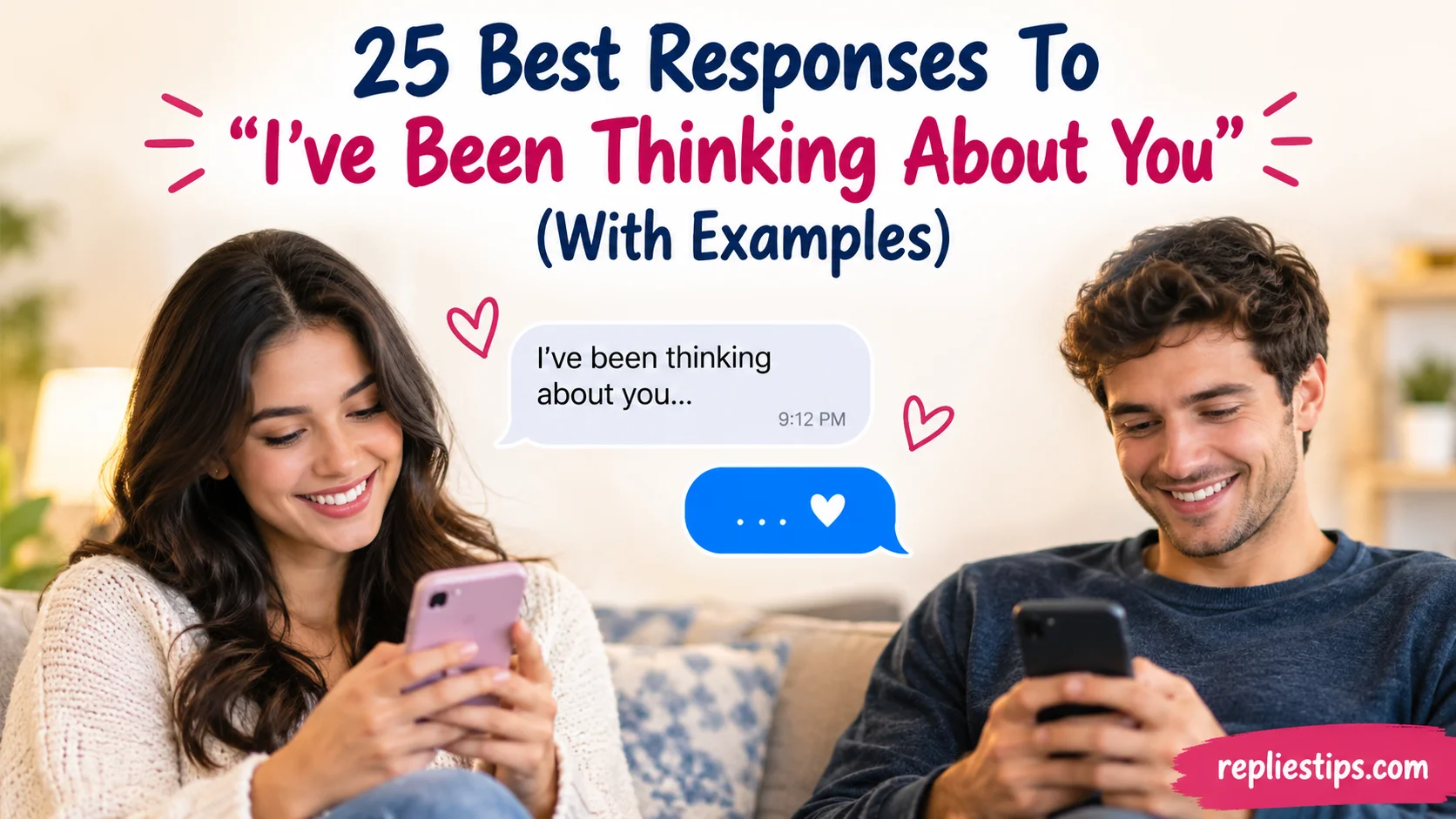
Best Responses To “I’ve Been Thinking About You” (With Examples) help you reply without overthinking. When a text appears on your screen, consider whether a friend, crush, partner, or ex is reaching out. Their message may feel sweet, flirty, romantic, comforting, or unexpected, so choose a response that matches the mood and protects the connection. You can keep things light, show affection, or set gentle boundaries while keeping your answer natural, thoughtful, and clear without stress in any situation too.
If someone recently said it, pause for a second and figure out how you feel. You can respond warmly, playfully, casually, honestly, or flirt back, depending on the person and situation. A genuine reply can deepen communication, while clear boundaries can prevent an awkward moment. Having versatile responses ready also helps you avoid typing, deleting, and panicking before sending your message. This simple approach makes each conversation easier and helps you choose words that fit the moment, relationship and interest.
1. “That means a lot to me.”
When someone says they’ve been thinking about you, this response shows appreciation and emotional warmth. It works well in both personal and professional settings where you want to keep things genuine yet simple. Imagine reconnecting with an old friend—this reply keeps the tone heartfelt without overcomplicating the moment. It helps build trust and encourages deeper conversation while staying respectful and kind.
Meaning: Shows gratitude
Tone: Warm, sincere
Example: “That means a lot to me—thank you.”
Best Use: Friends, colleagues, emotional moments
2. “I’ve been thinking about you too.”
This is one of the most natural and balanced replies. It creates mutual connection and shows that the feeling is shared. Picture a close friend texting you out of the blue—this response reassures them that they’re equally valued. It strengthens bonds and keeps the conversation flowing effortlessly without sounding forced or overly emotional.
Meaning: Mutual feelings
Tone: Friendly, caring
Example: “I’ve been thinking about you too lately.”
Best Use: Friends, loved ones
3. “That’s so kind of you to say.”
This response adds a polite and appreciative touch. It works especially well when you’re unsure about the sender’s intent. Imagine a colleague reaching out—this reply keeps things respectful and professional. It acknowledges their message without assuming deeper emotions, making it a safe and thoughtful choice.
Meaning: Appreciation
Tone: Polite, neutral
Example: “That’s so kind of you to say, thank you.”
Best Use: Professional or casual settings
4. “You just made my day.”
This reply adds positivity and emotional warmth. It shows that their message had a meaningful impact. Picture receiving a message during a busy day—this response expresses happiness and encourages further connection. It’s simple yet powerful in building emotional closeness.
Meaning: Happiness
Tone: Cheerful
Example: “You just made my day with that message!”
Best Use: Friends, partners
5. “What made you think of me?”
This response keeps the conversation engaging and curious. It invites the other person to share more. Imagine reconnecting with someone—this reply opens the door to deeper dialogue. It shows interest without being too direct or emotional.
Meaning: Curiosity
Tone: Engaging
Example: “That’s sweet—what made you think of me?”
Best Use: Casual conversations
6. “I’m glad I crossed your mind.”
This is a light and slightly playful reply. It keeps things positive without being too serious. Picture a friendly chat—it adds charm and warmth. It’s perfect when you want to keep things relaxed yet meaningful.
Meaning: Appreciation
Tone: Light, friendly
Example: “I’m glad I crossed your mind today!”
Best Use: Friends, casual chats
7. “That’s really sweet of you.”
A simple and kind response that works in almost any situation. It acknowledges the message while keeping things warm. Imagine someone expressing care—this reply keeps things genuine and respectful.
Meaning: Gratitude
Tone: Gentle
Example: “That’s really sweet of you, thank you.”
Best Use: All situations
8. “I miss you too.”
This reply is ideal when there’s emotional closeness. It shows longing and connection. Picture a loved one reaching out—this response deepens the bond and expresses shared feelings.
Meaning: Emotional connection
Tone: Loving
Example: “I miss you too—hope we can meet soon.”
Best Use: Close relationships
9. “That’s good to hear from you.”
This keeps things friendly and appreciative. It’s great for reconnecting with someone after a long time. Imagine an old friend messaging—you acknowledge them warmly without diving too deep.
Meaning: Appreciation
Tone: Friendly
Example: “That’s good to hear from you after so long!”
Best Use: Reconnecting
10. “You’ve been on my mind as well.”
This response is slightly more thoughtful and expressive. It works well when you want to sound sincere. Picture a meaningful connection—this reply reflects mutual care and respect.
Meaning: Shared thoughts
Tone: Thoughtful
Example: “You’ve been on my mind as well lately.”
Best Use: Friends, partners
11. “That’s so thoughtful.”
This is a short and respectful reply. It shows appreciation without adding too much emotion. It’s perfect for balanced communication.
Meaning: Appreciation
Tone: Neutral
Example: “That’s so thoughtful of you.”
Best Use: Professional or casual
12. “I appreciate you reaching out.”
A professional yet warm response. It works well in formal settings. Imagine a colleague checking in—this reply keeps things polite and appreciative.
Meaning: Gratitude
Tone: Professional
Example: “I appreciate you reaching out—it means a lot.”
Best Use: Work environment
13. “That made me smile.”
This adds a positive emotional touch. It shows the message had a good impact. It’s great for friendly or romantic conversations.
Meaning: Happiness
Tone: Warm
Example: “That made me smile—thank you!”
Best Use: Friends, partners
14. “I’m here for you too.”
This response adds support and reassurance. It’s perfect when the message carries emotional weight. It strengthens trust and connection.
Meaning: Support
Tone: Caring
Example: “I’m here for you too, always.”
Best Use: Emotional situations
15. “That’s really nice to hear.”
A simple and balanced reply. It keeps things neutral yet kind. It works in almost any situation without overcommitting emotionally.
Meaning: Appreciation
Tone: Neutral
Example: “That’s really nice to hear from you.”
Best Use: General use
Read More: 25 Funny Responses to “For Sure” (With Examples)
16. “You always know how to make me feel special.”
This response adds a personal and emotional touch. It’s ideal for close relationships. It strengthens intimacy and connection.
Meaning: Emotional value
Tone: Loving
Example: “You always know how to make me feel special.”
Best Use: Romantic context
17. “I’m glad we’re connected.”
This reply highlights the importance of the relationship. It’s thoughtful and meaningful without being overly emotional.
Meaning: Connection
Tone: Warm
Example: “I’m glad we’re connected—it means a lot.”
Best Use: Friends, colleagues
18. “That’s so good to know.”
A light and positive response. It keeps the conversation flowing naturally. It’s simple yet effective.
Meaning: Appreciation
Tone: Casual
Example: “That’s so good to know—thank you!”
Best Use: Casual chats
19. “You’ve been missed.”
This reply adds emotional depth. It’s great for reconnecting and showing care. It makes the other person feel valued.
Meaning: Emotional connection
Tone: Warm
Example: “You’ve been missed around here.”
Best Use: Friends, family
20. “I was just thinking about you!”
This creates a fun and surprising moment. It shows coincidence and mutual connection. It keeps the tone lively.
Meaning: Mutual thought
Tone: Playful
Example: “I was just thinking about you—how funny!”
Best Use: Friends
21. “That’s really meaningful to me.”
A deeper emotional response. It shows genuine appreciation and connection. It’s perfect for heartfelt moments.
Meaning: Emotional value
Tone: Sincere
Example: “That’s really meaningful to me—thank you.”
Best Use: Close relationships
22. “I’m happy to hear from you.”
This is a friendly and welcoming reply. It keeps things positive and open. It’s great for starting conversations.
Meaning: Happiness
Tone: Friendly
Example: “I’m happy to hear from you today.”
Best Use: General use
23. “That’s so lovely.”
A soft and kind response. It’s simple but emotionally warm. It works well in gentle conversations.
Meaning: Appreciation
Tone: Gentle
Example: “That’s so lovely of you to say.”
Best Use: Friends, family
24. “You’re very thoughtful.”
This highlights the other person’s kindness. It’s respectful and appreciative. It works in both personal and professional settings.
Meaning: Compliment
Tone: Polite
Example: “You’re very thoughtful—thank you.”
Best Use: All contexts
25. “Let’s catch up soon.”
This response moves the conversation forward. It shows interest in reconnecting. It’s practical and engaging.
Meaning: Action-oriented
Tone: Friendly
Example: “Let’s catch up soon—I’d love that.”
Best Use: Reconnecting
FAQs:
1. How should I respond to “I’ve been thinking about you”?
Choose a response based on your relationship and tone—warm, polite, or playful.
2. Can I reply casually to this message?
Yes, simple replies like “That’s sweet” or “You too!” work well.
3. What is the best romantic response?
“I’ve been thinking about you too” or “You make me feel special” are great options.
4. How do I respond professionally?
Use polite replies like “I appreciate you reaching out.”
5. Should I always respond?
Yes, replying shows respect and keeps communication strong.
Conclusion:
Responding to “I’ve been thinking about you” doesn’t have to be complicated. With these 25 best responses, you can choose the perfect reply for any situation—whether it’s friendly, romantic, or professional. The key is to stay genuine, thoughtful, and appropriate to your relationship. By using these examples, you’ll not only reply confidently but also strengthen your connections and keep conversations meaningful.








1 thought on “25 Best Responses To I’ve Been Thinking You(With Examples)”