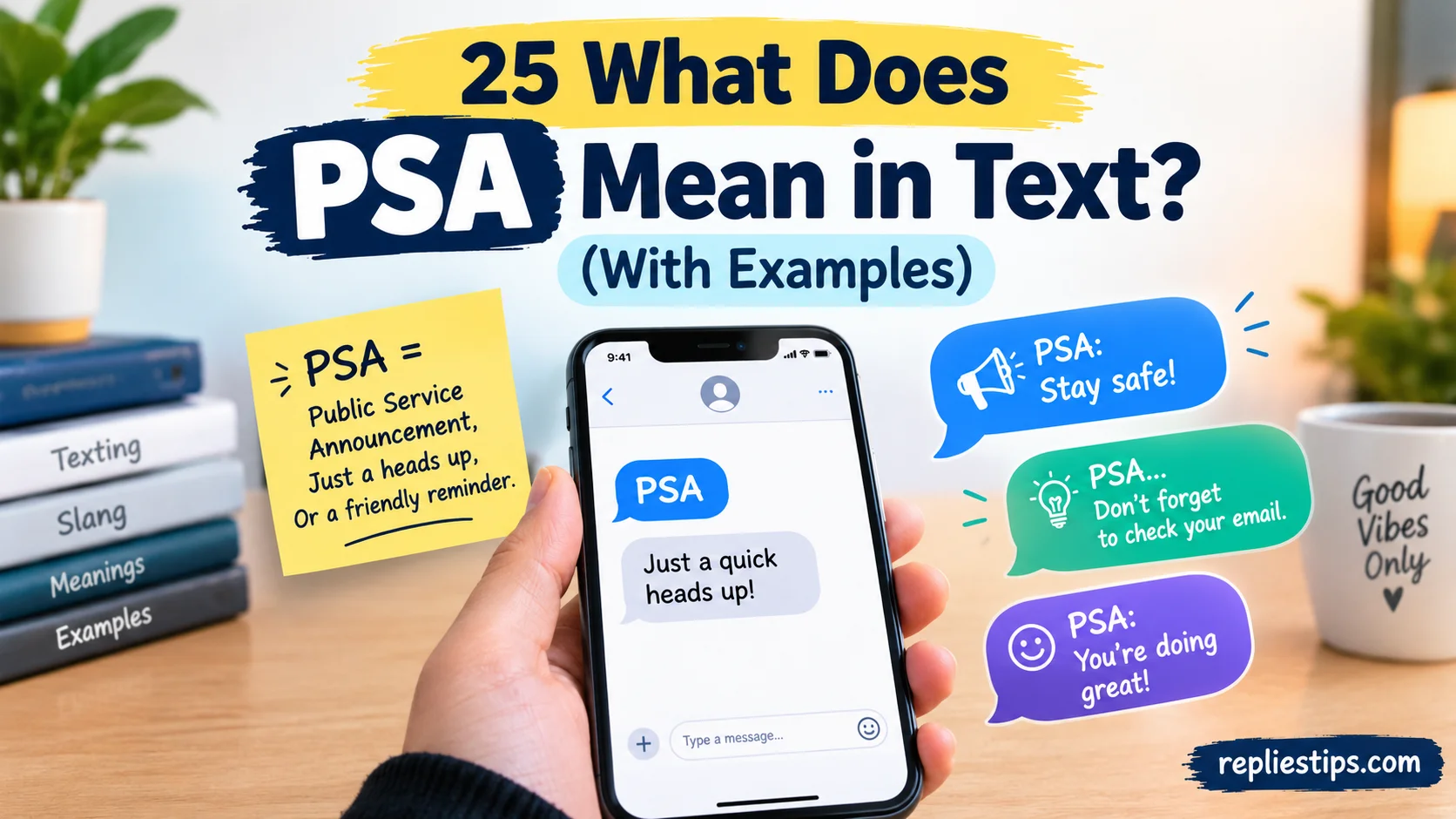
The What Does PSA Mean in Text? (With Examples) guide explains how PSA means Public Service Announcement in everyday digital communication. This abbreviation helps people share important information, helpful advice, reminders, and warnings in a text message, group chat, or social media post. For example, “PSA: The meeting starts at 9, not 10” highlights a schedule change. Depending on the context, PSA can sound serious, funny, or sarcastic. It helps grab attention and makes the following message worth noticing. People also use it in casual chats to share useful tips, opinions, or playful announcements with their audience.
The PSA meaning in texting can vary across different fields, including medicine, physics, aviation, and business. Online, it commonly introduces public information, helpful reminders, important announcements, and informative content. Understanding the social context helps readers avoid misunderstandings and interpret the message correctly. When someone sends PSA, you can acknowledge the information, follow the advice, or respond with humor if the announcement is playful. Whether used in online messaging, group conversations, or informal communication, PSA is a flexible example of internet abbreviations and texting slang that makes important messages easier to notice and understand.
1. PSA Meaning in Text Messages
PSA usually means Public Service Announcement in text messages. It introduces information that the sender believes other people should know. Rather than writing a long introduction, someone can simply type “PSA” to make a point stand out. For example, a friend might send a reminder about an upcoming deadline, a change in plans, or something everyone should remember. The abbreviation works in both casual conversations and more informative group chats. Its meaning depends on the message that follows, but the main purpose is to draw attention to useful information. In everyday texting, PSA often sounds friendly and direct rather than formal or official.
Meaning: Public Service Announcement; a message intended to inform others.
Tone: Informative, direct, and sometimes friendly.
Example: “PSA: The meeting starts at 10 tomorrow.”
Best Use: Use PSA when sharing information that several people should know.
2. PSA Meaning on Snapchat
On Snapchat, PSA commonly stands for Public Service Announcement. Users may include it in snaps, stories, or private messages to highlight a reminder, opinion, or useful piece of information. For instance, someone might post a PSA about keeping their streaks active, respecting personal boundaries, or remembering an event. The abbreviation makes the message look like an announcement without requiring a formal tone. Depending on the content, it can be serious, humorous, or slightly sarcastic. Since Snapchat conversations are often casual, PSA can also introduce an observation that the sender wants friends to notice. The surrounding words usually reveal whether the message is meant as advice, a warning, or a joke.
Meaning: An announcement shared with Snapchat friends or followers.
Tone: Casual, playful, informative, or serious.
Example: “PSA: Screenshot my story if you need the event details.”
Best Use: Use PSA in snaps, stories, and group messages to highlight a useful reminder.
3. PSA Meaning on Instagram
On Instagram, PSA means Public Service Announcement and is often used in captions, Stories, Reels, and comments. Creators may use it to introduce practical advice, correct misinformation, share a reminder, or draw attention to an issue. For example, a fitness creator could write “PSA: Rest days are part of your workout routine.” Friends may also use the abbreviation for lighter topics, such as announcing a favorite product or reminding followers about an upcoming event. Although PSA sounds official, Instagram users frequently use it informally. The message itself determines how serious it feels. In general, the abbreviation signals that the following information deserves attention from the intended audience.
Meaning: A public-facing announcement or reminder.
Tone: Informative, persuasive, friendly, or humorous.
Example: “PSA: You can save this Reel and watch it later.”
Best Use: Use PSA in captions and Stories when you want followers to notice important information.
4. PSA Meaning on TikTok
On TikTok, PSA often introduces a tip, warning, opinion, or observation that a creator wants viewers to remember. Videos may begin with “PSA” before explaining a common mistake, sharing helpful advice, or discussing an everyday situation. For example, a creator might say, “PSA: Read the entire message before replying.” The abbreviation can make a video feel direct and attention-grabbing. It is also used humorously when the announcement is about something relatively unimportant, such as a favorite snack or a relatable habit. However, PSA does not automatically mean the information is verified or professionally endorsed. Viewers should still evaluate factual claims, especially when they involve health, safety, or money.
Meaning: A short announcement designed to get viewers’ attention.
Tone: Engaging, conversational, serious, or comedic.
Example: “PSA: You can turn on captions for this video.”
Best Use: Use PSA when introducing a useful tip or observation in a TikTok video or caption.
5. PSA Meaning in WhatsApp Chats
In WhatsApp messages, PSA usually means Public Service Announcement. People use it in family groups, workplace chats, friend groups, and community conversations to share information with multiple recipients. A person might announce a schedule change, remind everyone about an event, or explain an important update. For example, “PSA: The electricity will be off from 2 to 4 PM.” The abbreviation helps readers identify the purpose of the message quickly. In a private conversation, it can also introduce a lighthearted reminder. Although PSA suggests information intended for a wider audience, people commonly use it in small groups. The message should still be relevant to the people receiving it.
Meaning: An announcement intended to inform a group.
Tone: Helpful, practical, and direct.
Example: “PSA: Please send your forms before Friday.”
Best Use: Use PSA in WhatsApp groups when everyone needs the same update.
6. PSA Meaning in Discord
On Discord, PSA commonly means Public Service Announcement. It appears in gaming servers, community channels, study groups, and online communities. A moderator might use it to announce new rules, explain maintenance, or remind members about an event. Regular users may also share tips or helpful information. For example, “PSA: Check the pinned messages before asking your question.” In gaming communities, the abbreviation can introduce advice about game updates or server activities. The tone ranges from official and serious to playful and casual. Although PSA can make an announcement stand out, users should follow the server’s rules about where announcements belong and avoid posting repetitive messages.
Meaning: An informational announcement for a Discord community.
Tone: Community-focused, helpful, or authoritative.
Example: “PSA: The tournament begins at 7 PM UTC.”
Best Use: Use PSA in relevant Discord channels to communicate updates, reminders, or useful community information.
7. PSA Meaning in Social Media Posts
Across social media, PSA stands for Public Service Announcement. People use it to introduce information that deserves attention, whether it concerns daily life, online behavior, entertainment, or community issues. A post might remind followers to protect their privacy, check an event date, or think carefully before sharing a rumor. Other posts use PSA for harmless opinions and amusing observations. For example, “PSA: You don’t have to reply to every message immediately.” The abbreviation gives the opening line a clear purpose and can encourage readers to continue. Still, using PSA does not make a statement universally true. Readers should consider the context and distinguish personal opinions from verifiable information.
Meaning: A social media announcement intended to inform or remind people.
Tone: Attention-grabbing, educational, or conversational.
Example: “PSA: Always check the source before sharing a news post.”
Best Use: Use PSA when a post contains information relevant to your audience.
8. PSA as a Friendly Reminder
PSA is frequently used to give a friendly reminder without sounding overly formal. Instead of sending a long message, someone can start with the abbreviation and state the important point immediately. This works well for reminders about appointments, assignments, deadlines, or everyday responsibilities. For instance, a classmate might write, “PSA: Our project is due tomorrow.” The wording can feel helpful rather than demanding, particularly when the rest of the message is polite. However, the tone depends on the relationship between the sender and recipient. A reminder about something obvious may sound sarcastic in certain conversations. Adding friendly wording can make the message feel more supportive and less like a reprimand.
Meaning: A reminder that the sender wants others to notice.
Tone: Helpful, friendly, and occasionally firm.
Example: “PSA: Don’t forget to bring your charger!”
Best Use: Use PSA for reminders that benefit friends, classmates, coworkers, or group members.
9. PSA as a Warning
Sometimes, PSA introduces a warning about a possible problem or an action people should avoid. The sender may want to alert others to a scam, a misleading message, a sudden change, or a common mistake. For example, “PSA: Don’t click suspicious links from unknown accounts.” In this situation, the abbreviation emphasizes the importance of the information. It can be useful in group chats and online communities where one warning may help several people. Nevertheless, the warning should be accurate and specific. A dramatic statement is not necessarily a reliable one, and a PSA label does not verify the claim. When discussing serious risks, include credible information whenever possible.
Meaning: An announcement that alerts people to a possible risk.
Tone: Cautious, serious, and protective.
Example: “PSA: Verify the sender before opening an unexpected attachment.”
Best Use: Use PSA to communicate a clear, relevant warning supported by reliable information.
10. PSA as Helpful Advice
PSA can introduce practical advice that makes everyday life easier. Someone might share a useful shortcut, a study technique, a communication tip, or a suggestion they wish they had learned earlier. For example, “PSA: Save a copy of your work before updating your computer.” The abbreviation gives the advice a simple introduction and suggests that other people may benefit from it too. This use is common in online communities, social media posts, and conversations between friends. The advice does not need to be serious or life-changing. Even a small suggestion can be useful when it addresses a shared problem. Good advice should be relevant, understandable, and appropriate to the situation.
Meaning: A public-style message sharing a useful tip.
Tone: Helpful, practical, and encouraging.
Example: “PSA: Write down your questions before a doctor’s appointment.”
Best Use: Use PSA when sharing a practical tip that could help other people.
11. PSA as a Funny Announcement
Not every PSA is serious. People often use the abbreviation to introduce a funny observation, an exaggerated complaint, or a harmless personal preference. For example, someone might text, “PSA: Fries taste better when you steal one from your friend’s plate.” The humor comes from presenting an ordinary opinion as though it were an important public announcement. This style is popular in casual conversations and social media captions because it creates a playful contrast between formal wording and an everyday subject. The audience generally understands that the statement is meant as a joke. Still, the humor depends on context, so a lighthearted PSA should not make a serious warning appear trivial.
Meaning: A humorous announcement about an everyday topic.
Tone: Playful, informal, and sometimes exaggerated.
Example: “PSA: Weekend naps should count as a hobby.”
Best Use: Use PSA humorously when sharing a harmless opinion or relatable observation with friends.
12. PSA as a Sarcastic Statement
PSA can also introduce sarcasm when someone wants to emphasize something they believe should be obvious. For example, “PSA: Being rude doesn’t make you look cool.” The sender may be genuinely frustrated, lightly teasing someone, or commenting on a familiar social situation. In written conversations, sarcasm can be difficult to interpret because readers cannot always hear the speaker’s voice. A statement that seems funny to one person may sound confrontational to another. The surrounding conversation, relationship, and wording help determine the intended tone. When using PSA sarcastically, consider your audience and avoid turning a simple observation into an unnecessary personal attack.
Meaning: An announcement that communicates criticism or an obvious observation with irony.
Tone: Sarcastic, teasing, or mildly annoyed.
Example: “PSA: Reading the instructions before starting can actually help.”
Best Use: Use PSA sarcasm with people who understand your humor and the context behind your message.
13. PSA in Group Chats
Group chats are a natural place for PSA because one message can inform several people at once. Friends may use it to coordinate plans, while classmates or coworkers may share deadlines and schedule changes. For example, “PSA: We’re meeting at the library instead of the cafe.” The abbreviation helps separate an important update from the ordinary conversation happening around it. However, not every group message needs to begin with PSA. It works best when the information is relevant to most members and worth highlighting. Keep the message short, provide any necessary details, and avoid repeatedly announcing minor updates that do not affect the group.
Meaning: A group announcement or shared reminder.
Tone: Practical, direct, and cooperative.
Example: “PSA: The group presentation has moved to Thursday.”
Best Use: Use PSA when sharing an update that affects several members of a chat.
14. PSA in Online Communities
Online communities use PSA to spread information among people who share an interest, activity, or goal. This may include gaming groups, hobby forums, educational communities, and local discussion spaces. A member could announce a rule change, explain how to avoid a common mistake, or direct newcomers to useful resources. For example, “PSA: The beginner’s guide is available in the pinned post.” The abbreviation makes the message recognizable as an announcement, even when the community is informal. Its usefulness depends on the quality of the information and whether it reaches the right audience. A well-written community PSA is specific, respectful, and easy to understand.
Meaning: An announcement intended for members of an online community.
Tone: Informative, collaborative, and community-minded.
Example: “PSA: Please read the community guidelines before posting.”
Best Use: Use PSA when sharing relevant resources, guidelines, or updates with community members.
15. PSA in Gaming Conversations
In gaming conversations, PSA often introduces information about gameplay, updates, events, or helpful strategies. Players may use it to alert teammates to a change, explain a useful setting, or share information about an in-game activity. For example, “PSA: You can change the control settings in the options menu.” The abbreviation is useful because gaming chats can move quickly, and a clear opening helps other players recognize an important point. Some gaming PSAs are serious, while others jokingly complain about difficult levels or unexpected game mechanics. Players should distinguish personal strategies from confirmed game information, particularly when discussing updates, competitive rules, or technical problems.
Meaning: An announcement sharing gaming-related information or advice.
Tone: Helpful, casual, and sometimes humorous.
Example: “PSA: Check the patch notes before choosing your loadout.”
Best Use: Use PSA in gaming chats or servers to share tips, updates, and relevant reminders.
Read More: 25 YK Meaning in Text (With Examples)
16. PSA in School and College Chats
Students may use PSA in class group chats to announce deadlines, assignment instructions, schedule changes, or study resources. For example, “PSA: The professor uploaded the review sheet.” The abbreviation can help classmates notice information that might otherwise get buried beneath unrelated messages. It is particularly useful when a single update affects the whole class. However, students should make sure the information is accurate before forwarding it. If a deadline or exam time is uncertain, it is better to check the official course platform or ask the instructor. PSA can make student communication easier, but it should not replace official academic instructions.
Meaning: An announcement intended to inform students or classmates.
Tone: Informative, supportive, and direct.
Example: “PSA: The assignment instructions are posted online.”
Best Use: Use PSA to share verified academic reminders and updates with classmates.
17. PSA in Workplace Messages
In workplace communication, PSA may introduce a reminder or update relevant to colleagues. For example, a team member could write, “PSA: Please submit your timesheets by Friday.” The abbreviation is common in informal workplace chats, but its suitability depends on the organization’s communication style. In a relaxed team channel, PSA may sound efficient and approachable. In a formal email to clients or senior leadership, writing “Important reminder” or “Team announcement” may be clearer and more professional. The message should include the relevant deadline, action, or change. Using the abbreviation does not automatically make a workplace announcement official, so important policies should be communicated through approved channels.
Meaning: A workplace announcement or reminder.
Tone: Professional, direct, and practical when used appropriately.
Example: “PSA: The office will close early this Friday.”
Best Use: Use PSA in informal team chats when colleagues need a shared update.
18. PSA in Dating and Relationship Chats
In dating and relationship conversations, PSA may introduce a personal boundary, preference, or observation about communication. For example, someone might say, “PSA: Clear communication is better than guessing games.” The message may be sincere, playful, or indirectly directed at a particular person. Because relationships involve personal feelings, the tone matters more than the abbreviation itself. A PSA can make an important point easier to notice, but it can also sound passive-aggressive if the sender uses it instead of addressing an issue directly. When discussing boundaries or expectations, clear and respectful language is usually more effective than relying on hints or sarcasm.
Meaning: An announcement about a relationship preference, boundary, or observation.
Tone: Honest, reflective, playful, or occasionally pointed.
Example: “PSA: It’s okay to ask for clarity instead of making assumptions.”
Best Use: Use PSA for general relationship observations, but discuss personal conflicts directly and respectfully.
19. PSA About Personal Boundaries
A PSA can be used to remind people about respect, consent, privacy, and personal boundaries. Someone might share a message explaining that people can decline invitations, take time to respond, or choose what they disclose online. For example, “PSA: Not everyone is comfortable sharing personal details.” These messages may help start conversations about respectful behavior, especially in communities where people have different expectations. However, a general announcement cannot replace a direct conversation when a specific boundary needs to be communicated. If someone has crossed a personal line, explain what happened and what needs to change. A good PSA encourages awareness without unnecessarily identifying or embarrassing another person.
Meaning: An announcement that encourages respect for personal boundaries.
Tone: Assertive, considerate, and educational.
Example: “PSA: Respect someone’s privacy, even when you’re curious.”
Best Use: Use PSA to promote respectful behavior and reinforce general boundaries.
20. PSA About Safety and Scams
PSA is often used to introduce safety reminders, especially online. A message might warn people about suspicious links, impersonation accounts, fake giveaways, or requests for sensitive information. For example, “PSA: Never share a verification code with someone who contacts you unexpectedly.” This type of announcement can be valuable when the warning is accurate and actionable. Readers should still verify information through reliable sources rather than trusting a post solely because it begins with PSA. When discussing a suspected scam, describe the warning signs and explain what people can do to protect themselves. Avoid sharing private information or repeating unverified accusations about specific individuals.
Meaning: A safety announcement intended to help people avoid risks.
Tone: Serious, protective, and informative.
Example: “PSA: Use the official website to check whether a message is legitimate.”
Best Use: Use PSA for clear safety guidance supported by reliable information.
21. PSA Meaning in Comments and Replies
In social media comments, PSA can introduce a correction, clarification, or additional piece of information. Someone might respond to a post with “PSA: The event is on Saturday, not Sunday.” Others may use it to add context that they believe readers have overlooked. Because comments are often short, PSA can make the main point immediately visible. However, a correction can sound dismissive if the wording is unnecessarily harsh. A respectful reply should explain the relevant fact without insulting the original poster. Remember that PSA does not automatically mean a correction is correct. When accuracy matters, provide a reliable source or explain how the information was confirmed.
Meaning: An announcement or clarification shared in a comment or reply.
Tone: Informative, corrective, or occasionally blunt.
Example: “PSA: The original announcement includes the updated location.”
Best Use: Use PSA in comments when a useful clarification may help other readers.
22. PSA vs. FYI in Texting
PSA and FYI are related abbreviations, but they serve slightly different purposes. PSA means “Public Service Announcement” and often highlights a message intended to inform or remind a wider group. FYI means “For Your Information” and usually introduces information that someone may find useful. For example, “PSA: The road is closed today” sounds like a broader warning, while “FYI: Your appointment is at 3 PM” sounds like a direct update. These meanings overlap in everyday conversations, so neither abbreviation has a completely fixed tone. The best choice depends on the audience, the importance of the information, and whether the message is a general announcement or a simple personal notification.
Meaning: PSA highlights an announcement; FYI introduces information for someone’s awareness.
Tone: PSA can sound public and attention-grabbing; FYI is often neutral and conversational.
Example: “PSA: The building entrance has changed.” / “FYI: Your package arrived.”
Best Use: Use PSA for group reminders or general announcements and FYI for straightforward information.
23. How to Reply to PSA in Text
Your response to PSA depends on what the sender is announcing. If the message contains a helpful reminder, you can say “Thanks for letting me know” or “Good to know.” If it includes a warning, you might acknowledge the information and ask a relevant follow-up question. When the PSA is humorous, a playful response may fit the conversation better. You do not need to respond to every announcement, especially when the sender is simply sharing information with a group. If the claim is important or surprising, verify it before acting on it. A good reply acknowledges the message, asks for clarification when needed, and matches the seriousness of the topic.
Meaning: A response that acknowledges or reacts to an announcement.
Tone: Appreciative, curious, supportive, or playful.
Example:
Friend: “PSA: The store closes at 8 tonight.”
You: “Thanks for the heads-up!”
Best Use: Respond with appreciation, a question, or a relevant comment based on the announcement.
24. When Should You Use PSA in Texting?
Use PSA when you want to make useful information noticeable to a group or audience. It works for reminders, event updates, practical tips, community guidelines, and appropriate humorous observations. Before using it, consider whether the message genuinely benefits the intended readers. If you are simply sharing a detail with one person, FYI may sound more natural. If you are communicating a formal policy, an official announcement may be more appropriate. Avoid using PSA to disguise an unsupported claim as a fact or to embarrass someone publicly. A concise message with accurate details will usually be more effective than an exaggerated announcement.
Meaning: An abbreviation used to highlight information people should notice.
Tone: Informative, friendly, serious, or playful depending on context.
Example: “PSA: Registration closes at midnight tonight.”
Best Use: Use PSA when the message is relevant, useful, and worth highlighting for its audience.
25. What Does PSA Mean in Text? Final Examples
The simplest way to understand PSA is to look at how people use it in real conversations. Most of the time, it means “Public Service Announcement,” but the tone changes according to the subject and the relationship between the people communicating. It can introduce a serious safety warning, a school reminder, a helpful tip, or a funny opinion. For example, “PSA: Back up your files” sounds practical, while “PSA: Pizza makes every Friday better” sounds playful. If you see the abbreviation online, read the words that follow it rather than assuming the message is official. Context is the key to understanding the sender’s intention.
Meaning: Public Service Announcement; an announcement, reminder, or attention-grabbing observation.
Tone: Informative, serious, casual, sarcastic, or humorous.
Example: “PSA: Check your messages before leaving home.”
Best Use: Understand PSA through the full message, the platform, and the conversation’s context.
FAQs:
1. What does PSA mean in texting?
PSA stands for Public Service Announcement. It introduces a reminder, warning, useful tip, or other information that the sender wants people to notice.
2. What does PSA mean on Snapchat?
On Snapchat, PSA usually means Public Service Announcement. It may appear in a snap, Story, or chat to share a reminder, funny observation, or useful update.
3. What does PSA mean on Instagram and TikTok?
On Instagram and TikTok, PSA commonly introduces advice, an announcement, a warning, or a personal observation. Its tone may be serious or humorous.
4. Is PSA slang?
PSA is an abbreviation rather than traditional slang. However, its casual use in texts, captions, and online conversations makes it part of everyday internet language.
5. Is PSA rude in a text message?
No, PSA is not inherently rude. It can sound helpful or neutral, although a sarcastic or critical message beginning with PSA may feel confrontational.
6. What is the difference between PSA and FYI?
PSA means Public Service Announcement and often emphasizes information intended for a group or broader audience. FYI means For Your Information and typically introduces information someone should know.
7. Can PSA be used jokingly?
Yes. People often use PSA humorously to introduce everyday opinions, relatable observations, or exaggerated announcements, such as “PSA: Coffee makes mornings better.”
8. How do you respond to PSA?
You can respond with “Thanks for the heads-up,” “Good to know,” or “Thanks for sharing.” For a funny PSA, a lighthearted reply may be appropriate.
9. Does PSA always mean Public Service Announcement?
In ordinary texting and social media, Public Service Announcement is the common meaning. In specialized professional settings, PSA can have other meanings, so context matters.
10. Should I use PSA in professional messages?
PSA can work in informal workplace chats, particularly for team reminders. For formal emails, official notices, or client communications, phrases such as “Important Update” may be more suitable.
Conclusion:
Understanding what PSA means in text makes online conversations easier to follow. The abbreviation usually stands for Public Service Announcement and introduces information that someone wants others to notice. You may see it on Snapchat, Instagram, TikTok, WhatsApp, Discord, and other platforms. Depending on the context, a PSA can be a helpful reminder, serious warning, practical tip, or funny observation. It can also sound sarcastic when used to emphasize an obvious point. Before interpreting a message, consider its wording, audience, and tone. Once you recognize these clues, you’ll know when PSA is being used to inform, remind, warn, or entertain.












1 thought on “25 What Does PSA Mean in Text? (With Examples)”