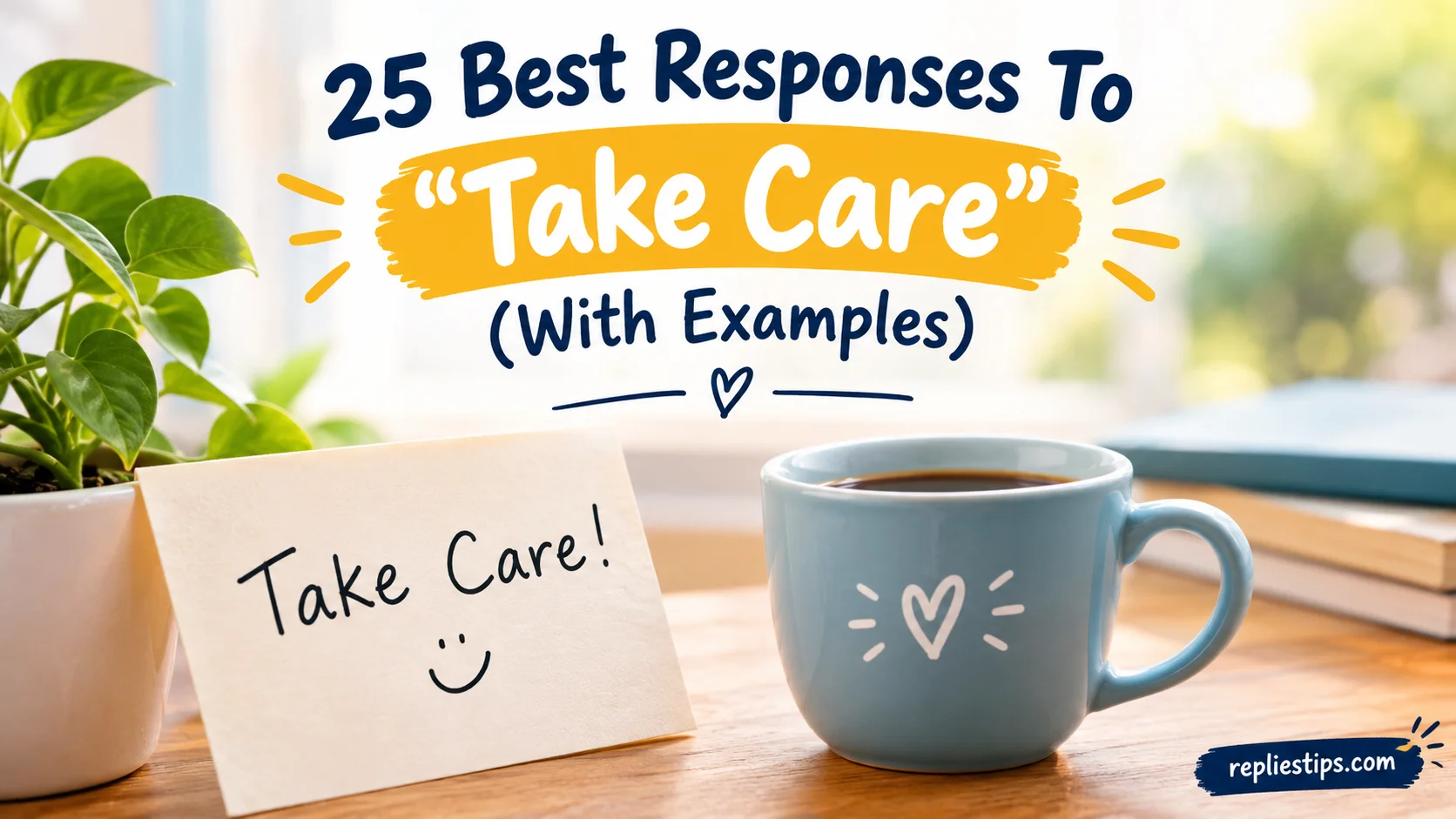
Best Responses To “Take Care” (With Examples) can help you choose the right reply for different people and situations. When someone says take care, your response can show kindness, concern, appreciation, and well-being. A casual answer may suit a good buddy or new friend, while a professional tone works better with a boss or colleague. This common English expression shares good wishes and can mean stay safe, be careful, or look after yourself. The right words, tone, and relationship can make goodbye feel natural and thoughtful.
In everyday communication, social interaction, and workplace communication, your response should match the context and situation. A warm and polite reply can make a friendly conversation feel more personal, while a professional sign-off can keep an email appropriate. For texts and chats, a quick reply to take care is often enough. You can also use sweet ways to say take care of yourself when someone is tired or facing a rough patch. A thoughtful response can express empathy, encouragement, self-care, emotional support, and personal connection.
1. You Too!
“You too!” is one of the easiest and most natural responses to “Take care.” It simply returns the same good wish to the other person. This response works because it is friendly without being overly formal or emotional. Imagine a friend leaving after spending time with you and saying, “Take care!” You can smile and say, “You too!” It keeps the goodbye warm and comfortable without making the conversation unnecessarily long. It is also useful in casual conversations with classmates, neighbors, coworkers, or acquaintances. Because it is short and universally understood, it is one of the safest responses when you are unsure what else to say.
Meaning: You are wishing the other person the same care and safety.
Tone: Friendly, casual, polite, and warm.
Example: “Thanks for stopping by. Take care!” — “You too!”
Best use: Use it in everyday conversations with friends, coworkers, classmates, and acquaintances.
2. Thanks, You Too!
“Thanks, you too!” adds a little more appreciation than simply saying “You too!” It acknowledges the person’s kindness before returning their good wish. This makes it especially useful when someone says “Take care” in a sincere or thoughtful way. For example, if a coworker is leaving the office and tells you to take care, saying “Thanks, you too!” sounds natural and respectful. The phrase is simple enough for casual situations but polite enough for professional conversations. It also works well in text messages because it doesn’t sound forced or overly formal. When you want to acknowledge someone’s concern while keeping your response brief, this is an excellent choice.
Meaning: Thank you for caring, and I hope you stay safe too.
Tone: Polite, friendly, appreciative, and natural.
Example: “Take care on your way home.” — “Thanks, you too!”
Best use: Use it when you want to show appreciation in everyday or workplace conversations.
3. I Will, Thanks!
“I will, thanks!” directly acknowledges the person’s advice or concern. Instead of simply returning the phrase, you are telling them that you appreciate what they said and intend to take care. This response can sound especially genuine when someone is worried about you or has reminded you to be careful. For instance, a parent might tell you to take care before you leave, and “I will, thanks!” gives them reassurance. It can also work between friends after a long conversation. The response is short, but it communicates that you heard the person and appreciate their concern.
Meaning: You appreciate their concern and will be careful.
Tone: Warm, reassuring, sincere, and casual.
Example: “Take care and don’t stay out too late.” — “I will, thanks!”
Best use: Use it when someone is genuinely concerned about your safety or well-being.
4. Thanks for Caring!
“Thanks for caring!” is a warmer response that directly recognizes the other person’s concern. It can make the conversation feel more meaningful because you are not merely returning the goodbye—you are acknowledging the emotion behind it. This response is particularly suitable when someone has supported you, checked on you, or shown genuine concern. For example, if a close friend says “Take care” after listening to you discuss a difficult day, “Thanks for caring!” can communicate sincere appreciation. It is more personal than “You too,” so it is best used when the relationship allows for a little emotional warmth.
Meaning: You appreciate the person’s concern and kindness.
Tone: Warm, sincere, appreciative, and personal.
Example: “Take care of yourself.” — “Thanks for caring!”
Best use: Use it with close friends, family members, or people who have shown genuine concern.
5. Take Care of Yourself Too!
“Take care of yourself too!” is a thoughtful way to return the sentiment while adding extra warmth. It sounds especially natural when the other person has reminded you to look after yourself. Rather than simply repeating “Take care,” this response emphasizes mutual concern. It can work in both spoken conversations and text messages. For example, if a friend is leaving after a long day, you might say, “Take care of yourself too!” This response can also be useful when someone is going through a stressful period because it shows that you are thinking about their well-being as well.
Meaning: You want the other person to look after themselves too.
Tone: Caring, warm, supportive, and sincere.
Example: “Take care, and get some rest.” — “You too. Take care of yourself!”
Best use: Use it with friends, relatives, or anyone you genuinely care about.
6. Stay Safe!
“Stay safe!” is a concise response that focuses specifically on safety. It is particularly appropriate when the person is traveling, going somewhere late, driving, or entering a situation where caution matters. For example, if a friend is heading home after a late event, saying “Stay safe!” sounds natural and considerate. The phrase is short enough for texting and direct enough for face-to-face conversations. It doesn’t necessarily carry romantic or emotional meaning, so it works across many relationships. It can also be used professionally when saying goodbye to a coworker who is traveling or heading home.
Meaning: You hope the person remains safe and avoids harm.
Tone: Caring, direct, friendly, and practical.
Example: “Take care on your way home.” — “Thanks! Stay safe too.”
Best use: Use it when safety or travel is part of the situation.
7. See You Soon!
“See you soon!” changes the focus from the goodbye to the next meeting. It works particularly well when you expect to see the person again soon. Instead of simply responding to “Take care,” you are showing that you look forward to continuing the relationship or conversation. For example, if a friend says “Take care” after hanging out, you can respond, “You too! See you soon!” This creates a positive and friendly ending. It is especially useful with classmates, friends, coworkers, and relatives whom you regularly meet.
Meaning: You expect to meet the person again soon.
Tone: Friendly, positive, casual, and welcoming.
Example: “Take care!” — “You too! See you soon!”
Best use: Use it when another meeting is likely or already planned.
8. Have a Great Day!
“Have a great day!” is a cheerful way to respond to “Take care,” especially during daytime conversations. It adds positivity to the ending and makes the goodbye sound more energetic. This response works well with coworkers, teachers, customers, classmates, neighbors, and acquaintances. For example, after finishing a conversation at work, you might hear “Take care,” and reply, “Thanks! Have a great day!” The phrase is polite without being overly formal. It is also useful in customer service or professional settings where you want to end an interaction on a pleasant note.
Meaning: You hope the rest of the person’s day goes well.
Tone: Cheerful, polite, positive, and professional.
Example: “Take care!” — “Thanks! Have a great day!”
Best use: Use it during daytime conversations, especially in polite or professional settings.
9. Have a Good One!
“Have a good one!” is a relaxed alternative to “Have a great day.” It usually means “Have a good day” or “Have a good time,” depending on the situation. Because it sounds casual, it is best suited to friends, coworkers, classmates, and acquaintances rather than highly formal situations. If someone says “Take care” while leaving work, you could answer, “Thanks, have a good one!” It keeps the exchange short and friendly. This phrase is especially useful when you want your response to sound natural rather than rehearsed.
Meaning: You hope the person has a good day or experience.
Tone: Casual, relaxed, friendly, and conversational.
Example: “Take care!” — “Thanks, have a good one!”
Best use: Use it in casual everyday conversations.
10. You Take Care Too!
“You take care too!” is slightly more expressive than “You too!” and clearly returns the person’s concern. It can sound particularly natural in friendly conversations where you want to show that you also care about their well-being. The phrase is flexible and can be used in person, over the phone, or through text. For example, if a friend says, “Take care, okay?” you could respond, “You take care too!” This response doesn’t require a long explanation, but it makes the goodbye feel more personal and mutual.
Meaning: You want the other person to care for themselves as well.
Tone: Friendly, caring, warm, and conversational.
Example: “Take care, buddy.” — “You take care too!”
Best use: Use it with friends, relatives, classmates, or friendly coworkers.
11. Thanks, I Appreciate It!
“Thanks, I appreciate it!” is a good response when “Take care” feels like a genuine expression of concern. It shows that you noticed and valued the person’s kindness. This response is especially useful when someone has been supportive during a difficult situation or has taken time to check on you. Unlike a simple “You too,” it places emphasis on gratitude. It can work with friends and family, but it can also be appropriate with coworkers or other people when the situation is sincere.
Meaning: You are grateful for the person’s concern.
Tone: Appreciative, sincere, respectful, and warm.
Example: “Take care of yourself.” — “Thanks, I appreciate it!”
Best use: Use it when you want to emphasize gratitude.
12. I’ll Do My Best!
“I’ll do my best!” is a slightly playful but sincere response to “Take care.” It suggests that you have heard the person’s concern and will make an effort to look after yourself. This can be especially natural when the person is encouraging you to be careful, rest, or avoid unnecessary risks. For example, if a friend says, “Take care of yourself and get some sleep,” you could say, “I’ll do my best!” It can also add a lighthearted touch to a serious goodbye without dismissing the other person’s concern.
Meaning: You will make an effort to look after yourself.
Tone: Casual, sincere, slightly playful, and reassuring.
Example: “Take care and don’t overwork yourself.” — “I’ll do my best!”
Best use: Use it when someone gives you caring advice or encouragement.
13. I’ll Keep That in Mind!
“I’ll keep that in mind!” is useful when “Take care” is connected to advice or a reminder. It tells the speaker that you have listened and will remember their concern. For example, if someone advises you to be careful while traveling, this response can sound respectful and thoughtful. It is slightly more formal than “You too,” which makes it suitable for teachers, mentors, coworkers, and other professional relationships. The phrase also avoids sounding repetitive because it responds to the meaning behind “Take care” rather than simply copying the expression.
Meaning: You have heard their advice and will remember it.
Tone: Respectful, thoughtful, polite, and moderately formal.
Example: “Take care while you’re traveling.” — “Thanks, I’ll keep that in mind!”
Best use: Use it when “Take care” is connected to specific advice or guidance.
14. I Will, Don’t Worry!
“I will, don’t worry!” provides reassurance to someone who may be concerned about you. It is especially useful when the speaker has expressed worry or has asked you to be careful. The phrase tells them that you understand their concern and will look after yourself. It can sound comforting without becoming overly emotional. For example, if a family member says, “Take care and call me when you arrive,” you might respond, “I will, don’t worry!” It works best when you already have a friendly or familiar relationship with the person.
Meaning: You reassure the person that you will be careful.
Tone: Reassuring, warm, casual, and comforting.
Example: “Take care of yourself, okay?” — “I will, don’t worry!”
Best use: Use it with family, close friends, or people who are genuinely worried about you.
15. Thanks, I’ll Be Careful!
“Thanks, I’ll be careful!” is a practical and direct response. It works especially well when someone says “Take care” because they are concerned about a particular situation. By saying you will be careful, you acknowledge their concern and provide reassurance. For example, if someone tells you to take care while driving, this response is more meaningful than simply saying “You too.” It shows that you understand why they are concerned. It is suitable for friends, parents, relatives, teachers, coworkers, and other people who may be looking out for you.
Meaning: You appreciate the concern and promise to act carefully.
Tone: Responsible, reassuring, polite, and sincere.
Example: “Take care on the road.” — “Thanks, I’ll be careful!”
Best use: Use it when the person is concerned about a specific risk or situation.
Read More: 25 Best Responses to “No Problem” (With Examples)
16. Always!
“Always!” is a short and confident response that can create a friendly ending. Depending on the context, it can mean “I always will” or “Of course.” Because it is so brief, its meaning depends heavily on the conversation. For example, if someone you know well says, “Take care,” you might smile and reply, “Always!” This response feels more natural in close or relaxed relationships than in formal conversations. It can also sound warm in text messages when the relationship is already comfortable.
Meaning: A confident acknowledgment that you will take care.
Tone: Confident, casual, friendly, and warm.
Example: “Take care, my friend.” — “Always!”
Best use: Use it with close friends or in relaxed conversations.
17. Until Next Time!
“Until next time!” is a positive goodbye that suggests another conversation or meeting will happen later. It works well when you want to end the interaction on a friendly note without simply repeating “Take care.” The phrase can sound slightly more polished than “See you soon,” especially when you don’t know exactly when you’ll meet again. For example, after talking with an old friend, you could say, “Take care!” followed by “Until next time!” It leaves the conversation with a sense of continuity and warmth.
Meaning: You expect or hope to talk or meet again.
Tone: Friendly, positive, warm, and slightly polished.
Example: “Take care!” — “You too. Until next time!”
Best use: Use it when you don’t know the exact time of your next meeting.
18. Keep Well!
“Keep well!” is a thoughtful alternative to “Take care.” It focuses on the person’s overall well-being rather than only safety. The phrase can sound polite and mature, making it suitable for acquaintances, coworkers, teachers, relatives, or people you do not know extremely well. It is particularly useful in written communication, such as messages, emails, or letters. For example, after a professional conversation, you could respond, “Thanks, keep well!” It is warm without being overly personal.
Meaning: You hope the person remains healthy and well.
Tone: Polite, thoughtful, respectful, and warm.
Example: “Take care!” — “Thanks, keep well!”
Best use: Use it in polite conversations and written communication.
19. You Stay Well Too!
“You stay well too!” is a caring response that returns the other person’s good wishes. It can be used when someone says “Take care” in a sincere way, particularly during a longer goodbye. The phrase emphasizes general well-being and sounds more thoughtful than a basic “You too.” It works well with family members, older relatives, friends, neighbors, and acquaintances. For example, after a phone call with a relative, you might say, “Thanks, you stay well too!” It provides a warm and respectful ending.
Meaning: You wish the other person continued health and well-being.
Tone: Caring, respectful, warm, and sincere.
Example: “Take care of yourself.” — “Thanks, you stay well too!”
Best use: Use it with relatives, friends, neighbors, or people you respect.
20. It Means a Lot!
“It means a lot!” is a more heartfelt response to “Take care.” Instead of focusing on the goodbye itself, you emphasize how much the person’s concern matters to you. This response is best when someone has been supportive, kind, or emotionally present. For example, if a close friend checks on you and says, “Take care,” replying “Thanks, it means a lot!” shows genuine appreciation. It is more emotional than casual responses, so it should be used when the situation genuinely calls for that level of sincerity.
Meaning: You deeply appreciate the person’s concern.
Tone: Heartfelt, sincere, appreciative, and personal.
Example: “Take care of yourself. I’m always here if you need anything.” — “Thanks, it means a lot!”
Best use: Use it when someone has provided meaningful support or kindness.
21. Same to You!
“Same to you!” is a simple way to return the sentiment behind “Take care.” It is similar to “You too!” but can sound slightly more conversational depending on the context. The phrase works in casual conversations and is particularly easy to use when you want a quick response. For example, if someone says “Take care,” you can simply say, “Same to you!” It avoids unnecessary repetition while still acknowledging the person’s good wishes. It is suitable for friends, classmates, coworkers, neighbors, and acquaintances.
Meaning: You wish the same thing for the other person.
Tone: Casual, friendly, simple, and natural.
Example: “Take care!” — “Same to you!”
Best use: Use it for quick, everyday conversations.
22. Thanks! I Hope You Do Too.
“Thanks! I hope you do too” adds a little more warmth than “You too.” It communicates both gratitude and a genuine wish for the other person’s well-being. This response can be particularly appropriate when the goodbye is sincere or when you have been discussing personal matters. For example, after talking with a friend about a busy week, you might say, “Thanks! I hope you do too.” It sounds thoughtful without becoming overly emotional. The response also works well in text messages.
Meaning: You appreciate the person’s concern and sincerely wish them well.
Tone: Thoughtful, friendly, sincere, and warm.
Example: “Take care this week.” — “Thanks! I hope you do too.”
Best use: Use it when you want your response to sound genuinely thoughtful.
23. Have a Safe Trip!
“Have a safe trip!” is an excellent response when the person saying “Take care” is traveling. Instead of simply repeating their words, you respond directly to their situation. It shows that you are paying attention and care about their journey. This phrase is useful for friends, family members, coworkers, classmates, and relatives who are heading somewhere. For example, if a friend says, “Take care, I’ll see you after my trip,” you can respond, “You too! Have a safe trip!” It sounds practical, caring, and natural.
Meaning: You hope the person’s journey is safe.
Tone: Caring, practical, friendly, and thoughtful.
Example: “Take care while you’re away.” — “Thanks! Have a safe trip!”
Best use: Use it when the person is traveling or commuting.
24. Talk to You Later!
“Talk to you later!” is useful when you expect to continue the conversation later. It turns “Take care” into a temporary goodbye rather than a final ending. This makes it particularly suitable for friends, classmates, family members, and coworkers who communicate regularly. For example, during a phone call, someone might say, “Okay, take care,” and you can respond, “You too! Talk to you later!” It sounds relaxed and natural, especially in text conversations. The phrase can also make a goodbye feel less formal.
Meaning: You expect to communicate with the person again later.
Tone: Casual, friendly, relaxed, and conversational.
Example: “Take care!” — “You too! Talk to you later!”
Best use: Use it when you expect another conversation soon.
25. You Too, Stay Safe!
“You too, stay safe!” combines two common good wishes into one friendly response. It acknowledges the person’s “Take care” while returning the concern with an additional reminder about safety. This makes it particularly useful when someone is traveling, going home late, or dealing with a situation where caution matters. The phrase can be used with friends, family, coworkers, and acquaintances. It feels caring without becoming too emotional. Because it is clear and straightforward, it works equally well in spoken conversations and text messages.
Meaning: You wish the person well and want them to remain safe.
Tone: Caring, friendly, practical, and warm.
Example: “Take care on your way home.” — “You too, stay safe!”
Best use: Use it when safety is an important part of the goodbye.
FAQs:
What is the best response to “Take care”?
A simple “You too!” is one of the most natural responses. You can also say “Thanks, you too!”, “Stay safe,” or “Take care of yourself too,” depending on the situation and your relationship with the person.
Is “You too” a good response to “Take care”?
Yes. “You too” is grammatically natural and widely used in everyday English. It means that you are returning the same good wish to the person who said “Take care.”
How do you respond to “Take care” professionally?
For a professional conversation, you can say “Thanks, you too!”, “Have a great day,” “Keep well,” or “I appreciate it.” These responses are polite without sounding too personal.
What can I say instead of “You too”?
You can say “Thanks, I appreciate it,” “Stay safe,” “Take care of yourself too,” “Have a good one,” “Keep well,” or “Until next time.” The best choice depends on the situation and your relationship with the speaker.
How do you respond to “Take care” from a friend?
With a friend, you can keep the response relaxed and warm. Try “You too!”, “Thanks, buddy,” “Stay safe,” “See you soon,” “Take care of yourself too,” or “Talk to you later.”
Conclusion:
Knowing the right response to “Take care” can make even a short goodbye feel more natural and thoughtful. The simplest choices, such as “You too!” and “Thanks, you too!”, work in most everyday situations, while responses like “Thanks for caring!” or “It means a lot!” are better when someone has shown genuine support or concern.
The most important thing is to match your response to the relationship, tone, and situation. A professional conversation may call for “Keep well” or “Have a great day,” while a close friend may appreciate “Take care of yourself too” or “Stay safe.” Choose a response that sounds natural to you, and your goodbye will feel sincere rather than rehearsed.








1 thought on “25 Best Responses To “Take Care” (With Examples)”