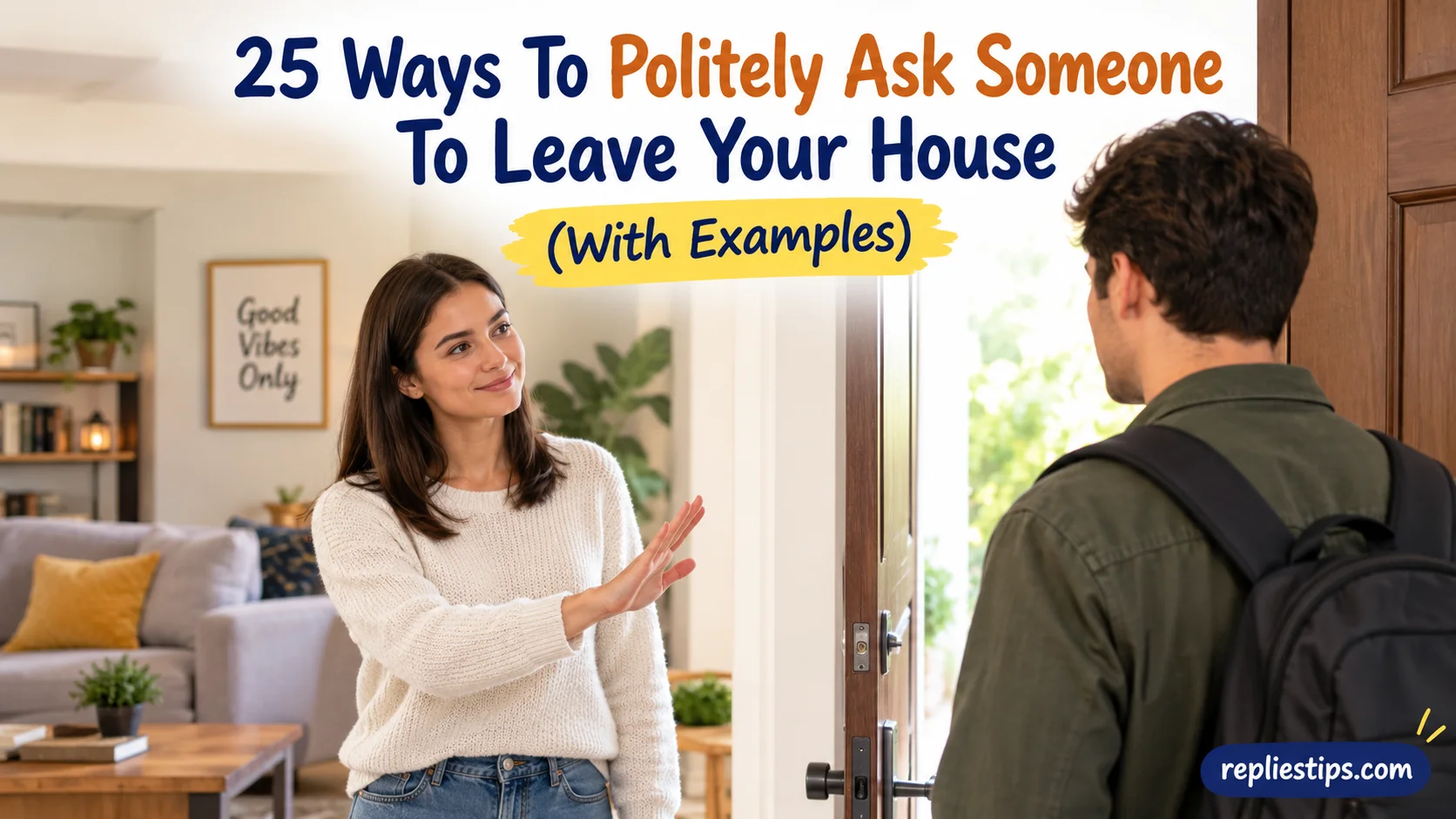
Ways To Politely Ask Someone To Leave Your House (With Examples) can help you handle an uncomfortable visit with kindness. Having guests over can be enjoyable, but a friend, family member, or relative may have stayed longer than expected. When a casual visit has run its course, use a friendly hint, reasonable explanation, or kind request. Stay respectful, clear, and confident so your guest does not feel unwelcome or embarrassed. This approach can reduce unnecessary tension and make the situation easier for everyone.
If someone is overstaying their welcome, you can set boundaries without becoming awkward or hostile. A person crashing at your home just for a week may need a clear reminder about leaving. You can ask someone to move out of your house respectfully, especially when dealing with houseguests. After dinner, friends may stay for 2-3 hours, while an introvert may want to leave, relax, and be alone before bed. A polite way to speak honestly can protect your comfort and your relationship.
1. “I Should Probably Let You Get Going”
One of the easiest polite ways to ask someone to leave your house is to make the suggestion sound like a natural ending to the visit. Saying, “I should probably let you get going,” gently signals that the conversation is coming to an end without directly saying, “Please leave.” This approach works especially well with friends, relatives, and casual guests because it sounds considerate rather than demanding. You are framing the departure as something that is probably best for both people. It also gives the guest a chance to gather their belongings and say goodbye without feeling embarrassed.
Meaning: You are politely signaling that the visit should end soon.
Tone: Friendly, indirect, and considerate.
Example: “I’ve really enjoyed catching up with you. I should probably let you get going before it gets too late.”
Best Use: Use this when you want to end a casual visit naturally.
2. “I Don’t Want To Keep You Too Late”
This phrase is useful when you want to encourage a guest to leave without making the request sound personal. Instead of focusing on your desire for them to go, you focus on their schedule. It suggests that you are being thoughtful about their time and responsibilities. You might use it when a friend has stayed longer than expected or when an evening conversation has continued late into the night. This is one of the more gentle ways to tell someone to go home because it creates a positive reason for ending the visit. The guest can leave without feeling rejected or unwelcome.
Meaning: You are suggesting that it is time for the guest to head home.
Tone: Warm, thoughtful, and polite.
Example: “This has been so much fun, but I don’t want to keep you too late.”
Best Use: Great for evening visits and social gatherings.
3. “I Have An Early Morning Tomorrow”
Giving a simple, honest reason can make asking a guest to leave much easier. Mentioning an early morning creates a practical explanation for why you need to end the visit. You do not have to provide a complicated excuse. A straightforward statement is often enough. This phrase works particularly well when you have work, school, an appointment, travel, or another responsibility the next day. It establishes a reasonable boundary while showing that you enjoyed having the person over. Most people understand that everyone needs enough time to rest and prepare for the following day.
Meaning: You need to end the visit because you have an early responsibility.
Tone: Honest, respectful, and straightforward.
Example: “I’ve had such a nice time, but I have an early morning tomorrow, so I should probably call it a night.”
Best Use: Use this for late-night guests.
4. “I Think We Should Call It A Night”
Sometimes the simplest way to end a visit is to clearly announce that the evening is over. “Call it a night” is a common expression that sounds much softer than saying, “You need to leave.” It works because it treats the ending as a normal part of the evening rather than a rejection of the guest. You can use it after dinner, during a long conversation, or when everyone has been relaxing for several hours. Adding a positive comment before the phrase can make it even friendlier and help preserve a warm atmosphere.
Meaning: The social visit has reached its natural ending.
Tone: Casual, friendly, and direct enough to be understood.
Example: “We’ve had a great evening. I think we should call it a night.”
Best Use: Ideal for evening gatherings and overnight conversations.
5. “I Need To Get Some Things Done Before Bed”
When you have household responsibilities waiting, this phrase provides a natural reason to end a visit. Maybe you need to clean up, prepare for work, organize something, or simply get ready for bed. You do not need to explain every detail. Mentioning that you have things to do gives the guest a clear signal that your free time is ending. This is particularly helpful when you want to avoid sounding confrontational. It also reminds the other person that your home is your personal space and that you have responsibilities outside the conversation.
Meaning: You have personal tasks that require your attention.
Tone: Polite, practical, and calm.
Example: “I’ve really enjoyed having you here, but I need to get a few things done before bed.”
Best Use: Useful when you need a natural excuse to end the visit.
6. “I’m Going To Start Getting Ready For Tomorrow”
This is a subtle but effective way to communicate that you are transitioning from social time to personal time. It tells the guest that your evening routine is beginning, which naturally suggests that they should prepare to leave. The phrase does not blame the guest for staying too long. Instead, it focuses on what you need to do next. You can make the message warmer by thanking them for coming over. This combination works especially well with friends and family members who might otherwise continue chatting without realizing that you are ready to finish the visit.
Meaning: You are beginning your routine for the next day.
Tone: Gentle, indirect, and friendly.
Example: “It was great having you over. I’m going to start getting ready for tomorrow.”
Best Use: Good for guests who do not notice subtle signals.
7. “Thanks So Much For Coming Over”
Sometimes gratitude can function as a polite closing signal. When you thank someone specifically for coming over, it naturally creates a sense of completion. You can then follow the statement with something like, “Let’s do this again soon.” This makes the guest feel appreciated while still communicating that the current visit is finished. It is particularly useful when you want to maintain a good relationship. Rather than focusing on the fact that the person has stayed too long, you emphasize the positive experience and end on a friendly note.
Meaning: You are closing the visit by expressing appreciation.
Tone: Warm, appreciative, and socially graceful.
Example: “Thanks so much for coming over. I had a wonderful time catching up with you.”
Best Use: Perfect for friends, relatives, and welcome guests.
8. “I’m Starting To Get Pretty Tired”
Being honest about your energy level can be one of the most natural ways to ask someone to leave politely. You are not saying the guest is annoying or unwelcome. You are simply explaining that you are tired and need some rest. This works particularly well when a guest has been at your house for several hours. Most reasonable people will understand the message immediately. If you want to make the statement warmer, pair it with appreciation for the visit. Clear but kind communication often works better than silently hoping someone will recognize that you want them to leave.
Meaning: You are tired and need to end the visit.
Tone: Honest, gentle, and personal.
Example: “I’m starting to get pretty tired, so I think I’m going to wind down for the evening.”
Best Use: Helpful when you want an honest but non-confrontational approach.
9. “I Think It’s About Time To Head Home”
This option is more direct while remaining respectful. It clearly communicates that the visit should end, but it avoids harsh wording. You can soften it by adding a compliment or saying that you enjoyed seeing the person. This phrase is particularly effective when indirect hints have not worked. Sometimes guests genuinely do not realize that you want them to leave, so a clear statement can actually be more considerate than dropping repeated hints. It gives them enough information to understand the situation without making them feel criticized.
Meaning: You believe the guest should begin heading home.
Tone: Direct, polite, and confident.
Example: “We’ve had a great time tonight. I think it’s about time to head home.”
Best Use: Best when subtle hints have not been effective.
10. “Let Me Walk You To The Door”
Physical cues can sometimes help end a visit naturally. When you stand up, gather yourself, and offer to walk the guest to the door, you create a clear transition from conversation to goodbye. The important thing is to keep the action friendly rather than abrupt. You can combine it with a thank-you, such as, “Thanks for coming over. Let me walk you to the door.” This method is especially useful when the conversation has become repetitive and you do not want to interrupt with a blunt statement.
Meaning: You are signaling that the visit has ended.
Tone: Courteous, warm, and action-oriented.
Example: “Thanks for stopping by! Let me walk you to the door.”
Best Use: Useful when you want a natural, nonverbal closing signal.
11. “I’ve Got A Few Things To Take Care Of”
This phrase gives you a flexible and believable way to end a visit. You do not have to reveal private details about what you need to do. “A few things to take care of” can refer to chores, work, preparation, errands, or personal time. It is useful because it establishes that your attention needs to shift away from socializing. When used politely, it does not sound like an accusation. You are simply explaining that you have reached the point where you need to return to your own responsibilities.
Meaning: You have responsibilities that require your attention.
Tone: Neutral, respectful, and practical.
Example: “I’m glad you came by, but I’ve got a few things to take care of tonight.”
Best Use: Suitable for casual guests and longer visits.
12. “I Need Some Quiet Time Now”
Sometimes you do not need an excuse at all. It is perfectly reasonable to want some quiet time in your own home. This statement communicates a personal boundary without blaming the other person. The key is to say it calmly and avoid sounding irritated. You can explain that you enjoyed their company while still needing some time alone. This approach can be especially helpful for people who frequently visit without checking whether you are available. Setting a respectful boundary now can prevent awkward situations in the future.
Meaning: You need personal space and quiet time.
Tone: Honest, calm, and boundary-focused.
Example: “I’ve enjoyed talking with you, but I need some quiet time now.”
Best Use: Best when you genuinely need privacy or personal space.
13. “I’m Going To Let You Get Back To Your Evening”
This phrase shifts the focus toward the guest’s own plans. It suggests that they probably have things to do and that you do not want to hold them up. It is especially effective when you know the person has responsibilities, family commitments, or plans later in the day. Because it sounds considerate, it can reduce the awkwardness of ending the visit. You are essentially saying, “I have enjoyed your company, but I think this is a good point for us to move on with our evenings.”
Meaning: You are politely ending the visit while respecting the guest’s schedule.
Tone: Considerate, indirect, and friendly.
Example: “I’ve really enjoyed catching up. I’m going to let you get back to your evening.”
Best Use: Great for casual social visits.
14. “I Think We’ve Covered Everything”
If a guest has come over for a specific reason, this is an excellent way to bring the meeting to a close. Maybe you discussed a project, planned an event, or solved a particular problem. By saying that you have covered everything, you establish that the purpose of the visit has been completed. This approach is especially appropriate in semi-formal situations because it sounds organized rather than personal. You can follow it with a thank-you and goodbye to make the transition feel natural.
Meaning: The main purpose of the visit has been completed.
Tone: Professional, polite, and conclusive.
Example: “I think we’ve covered everything we needed to discuss. Thanks for coming by.”
Best Use: Useful for meetings, work-related visits, and planned discussions.
15. “Would You Mind Heading Home Soon?”
When you need to be clearer, you can make a direct request while keeping the wording respectful. “Would you mind” softens the request and gives the sentence a courteous tone. Adding “soon” makes it clear that you want the guest to begin preparing to leave without sounding unnecessarily harsh. This option is better than vague hints when the person has stayed significantly longer than expected. Direct communication is often the healthiest approach when your boundaries are not being recognized.
Meaning: You are directly asking the person to leave soon.
Tone: Polite, clear, and respectful.
Example: “Would you mind heading home soon? I have a few things I need to take care of.”
Best Use: Use when you need a clear request without being rude.
Read More: 25 Responses to Life’s Challenges Hanging In There (With Examples)
16. “I’m Going To Have To End Our Visit Here”
This sentence is useful when you want to establish a firm but courteous boundary. It does not attack the guest or suggest that they have done something wrong. Instead, it makes your decision clear. The phrase works especially well when you have already given subtle signals and the person has not responded. Adding a positive closing statement can prevent the message from sounding cold. For example, you might say that you enjoyed seeing them and would like to meet again another time.
Meaning: You are formally ending the current visit.
Tone: Firm, respectful, and mature.
Example: “I’m going to have to end our visit here, but I’m really glad you stopped by.”
Best Use: Best for situations where subtle hints have failed.
17. “I’d Better Let You Head Out”
This is a short, natural expression that works well in everyday conversation. It sounds less demanding than “You need to leave” because it frames the departure as something that should happen naturally. You can use it after dinner, during a casual conversation, or at the end of a social gathering. The phrase is particularly useful when you want your guest to understand the hint without creating a serious or uncomfortable moment. A smile and friendly body language can make the message even warmer.
Meaning: You are suggesting that the guest should leave now.
Tone: Casual, friendly, and indirect.
Example: “It’s getting late. I’d better let you head out.”
Best Use: Excellent for friends and informal guests.
18. “I Have Some Personal Things To Deal With”
Not every reason for ending a visit needs to be explained. Sometimes you have personal matters that require privacy. This phrase allows you to communicate that you need to be alone without revealing information you would rather keep private. It is a useful boundary-setting expression because it gives enough explanation without inviting unnecessary questions. If the guest respects you, they should understand that personal time is legitimate. Keep your tone calm and confident, especially if the person tends to push for additional details.
Meaning: You need private time to handle personal matters.
Tone: Respectful, private, and firm.
Example: “I’ve enjoyed having you here, but I have some personal things to deal with now.”
Best Use: Good when you want privacy without explaining the reason.
19. “Let’s Pick This Conversation Up Another Time”
Long conversations can sometimes continue simply because neither person knows how to end them. This phrase gives you an easy way out. Rather than rejecting the conversation, you suggest continuing it at another time. That makes the ending feel temporary rather than negative. You can use this with a friend, family member, neighbor, or even someone who has stopped by unexpectedly. It is especially effective when you genuinely want to continue the relationship but simply do not have enough time or energy at the moment.
Meaning: You want to pause the conversation and continue later.
Tone: Friendly, positive, and reassuring.
Example: “This is a great conversation, but let’s pick it up another time. I need to get going for the evening.”
Best Use: Ideal for lengthy conversations.
20. “I’m Going To Start Cleaning Up”
Starting to clean up can be a practical signal that the gathering is ending. You might begin collecting cups, plates, or other items while politely mentioning that you need to tidy the house. The important thing is not to make the cleaning feel like a complaint about the guest. Instead, present it as part of your normal routine. This approach can work well after dinner or a small gathering when everyone has already spent enough time together. It naturally moves the atmosphere from socializing toward saying goodbye.
Meaning: You are transitioning from entertaining to household responsibilities.
Tone: Practical, casual, and polite.
Example: “I’m going to start cleaning up, so I think this is probably a good time to wrap things up.”
Best Use: Great after meals, parties, or gatherings.
21. “I’m Going To Get Ready For Bed”
For nighttime visitors, this is one of the clearest yet most polite options. Your bedtime routine is a normal personal boundary, so you do not need to feel guilty about mentioning it. The statement also provides an obvious transition from hosting to private time. You can make it warmer by thanking the person for visiting. If the guest has stayed very late, this phrase can help communicate that you need the house to yourself without saying anything insulting or uncomfortable.
Meaning: You are ready to end the evening and go to bed.
Tone: Gentle, honest, and clear.
Example: “I’ve had a great time tonight, but I’m going to get ready for bed.”
Best Use: Perfect for late-night visitors.
22. “Thanks For Stopping By—It Was Great Seeing You”
A warm goodbye can sometimes be enough to tell someone that their visit is finished. The words “thanks for stopping by” acknowledge that their visit was welcome, while “it was great seeing you” ends the interaction on a positive note. This works particularly well when you want to preserve a good relationship. You can make the signal stronger by standing up, moving toward the entrance, or picking up your belongings. Combining polite words with natural body language often makes the message unmistakable.
Meaning: You are expressing appreciation while closing the visit.
Tone: Warm, appreciative, and friendly.
Example: “Thanks for stopping by—it was great seeing you. Let’s do this again soon.”
Best Use: Best for short and friendly visits.
23. “I Really Need To Have Some Time To Myself”
There are situations where being direct about your need for personal space is the healthiest option. You do not need to invent an excuse when you simply want to be alone. Saying that you need time to yourself communicates a clear personal boundary without criticizing the guest. If necessary, explain that you have enjoyed their company but need some downtime. This can be especially helpful when dealing with someone who regularly visits without realizing that you need privacy.
Meaning: You need personal space and alone time.
Tone: Honest, mature, and boundary-conscious.
Example: “I’ve really enjoyed having you here, but I need to have some time to myself now.”
Best Use: Useful for setting healthy personal boundaries.
24. “I Think We Should Wrap Things Up”
“Wrap things up” is a widely understood phrase for ending a conversation, meeting, or visit. It is direct enough to communicate your intention but polite enough for most social situations. You can use it when you have already enjoyed the visit and simply want to bring it to a close. This phrase works particularly well because it does not imply that the guest has done anything wrong. Instead, it treats the ending as a normal transition. Add a friendly thank-you afterward to make it sound even more welcoming.
Meaning: You want to bring the visit to an end.
Tone: Polite, confident, and neutral.
Example: “I think we should wrap things up for tonight. Thanks so much for coming over.”
Best Use: Suitable for both casual and semi-formal situations.
25. “It’s Been Great Having You, But I Need You To Head Out Now”
Sometimes kindness requires clarity. If a guest repeatedly ignores subtle hints, you may need to make a straightforward request. This sentence acknowledges the positive part of the visit before clearly stating what you need. The words “I need you to head out now” are firm, but they are not insulting or aggressive. Use a calm voice and avoid adding unnecessary criticism. You are not responsible for making everyone happy with every boundary. You are responsible for communicating your needs respectfully and maintaining a comfortable environment in your own home.
Meaning: You are clearly asking the guest to leave immediately.
Tone: Firm, respectful, and direct.
Example: “It’s been great having you, but I need you to head out now. Thanks for understanding.”
Best Use: Use when a clear boundary is necessary.
How To Ask Someone To Leave Without Being Rude
The best approach depends on your relationship with the guest, the reason for the visit, and how long they have stayed. For a close friend, a casual phrase like “I’d better let you head out” may be enough. For someone who repeatedly ignores hints, a more direct statement such as “I need to have some time to myself now” may be necessary.
The key is to focus on your needs rather than criticizing the other person. Avoid statements that sound insulting, such as “You’ve been here too long” or “Why are you still here?” Instead, use “I” statements, offer a brief reason when appropriate, and maintain a calm tone.
Tips For Ending A Guest Visit Politely
- Give a gentle hint before becoming direct.
- Thank the guest for visiting.
- Use “I” statements instead of blaming language.
- Mention your schedule if you have somewhere to be.
- Avoid making unnecessary excuses.
- Stand up or move toward the door to reinforce your words.
- Suggest another time to meet if you genuinely want to see them again.
- Stay calm if the person reacts negatively.
- Remember that your home is your personal space.
- Be especially clear when someone repeatedly ignores your boundaries.
FAQs:
What is the nicest way to ask someone to leave your house?
A gentle option is, “I’ve really enjoyed having you over, but I should probably let you get going.” It expresses appreciation while clearly signaling that the visit is ending.
How do you tell a guest it is time to go?
You can say, “I think we should wrap things up for tonight,” or “I’d better let you head out.” Both phrases are polite but communicate that it is time to leave.
How do you ask someone to leave without hurting their feelings?
Focus on your own needs rather than criticizing the guest. Saying, “I’m getting tired and need some quiet time,” is usually kinder than saying, “You’ve stayed too long.”
What if the guest does not take the hint?
If subtle hints do not work, become more direct. Try saying, “I’ve enjoyed having you here, but I need you to head out now.” A clear boundary is better than becoming increasingly frustrated.
Is it rude to ask a guest to leave?
No. Your home is your personal space, and you are allowed to decide when a visit ends. Asking someone to leave can be completely respectful when you communicate the request calmly.
Should I make up an excuse to get someone to leave?
You do not always need an excuse. Honest statements about being tired, needing quiet time, or having responsibilities can be more natural and sustainable than inventing complicated reasons.
How can I end a long conversation politely?
Try saying, “This has been a great conversation, but let’s pick it up another time.” You can then thank the person and move toward the door to reinforce the goodbye.
What should I say to an unexpected visitor?
You can say, “It’s nice to see you, but I only have a few minutes today.” This establishes a time boundary early and makes it easier to end the visit later.
How do I ask a friend to leave without sounding mean?
Use a friendly statement that focuses on your needs. For example, “I’ve loved catching up, but I need to start getting ready for tomorrow.”
What if someone keeps coming to my house uninvited?
You may need to establish a firmer boundary. Tell them clearly that you need them to contact you before visiting and that unexpected visits are not convenient for you.
Conclusion:
Knowing 25 Ways To Politely Ask Someone To Leave Your House (With Examples) can make uncomfortable social situations much easier to handle. You do not have to be rude, create an elaborate excuse, or wait until you become frustrated. A simple phrase such as “I think we should wrap things up,” “I need some quiet time,” or “I’d better let you head out” can communicate your boundary naturally.
The most important part is your tone, timing, and clarity. Start gently when possible, thank your guest for coming, and become more direct if they do not understand the hint. Being polite does not mean ignoring your own needs. A respectful boundary allows you to protect your time, privacy, and comfort while still treating other people with kindness.










1 thought on “25 Ways To Politely Ask Someone To Leave Your House (With Examples)”