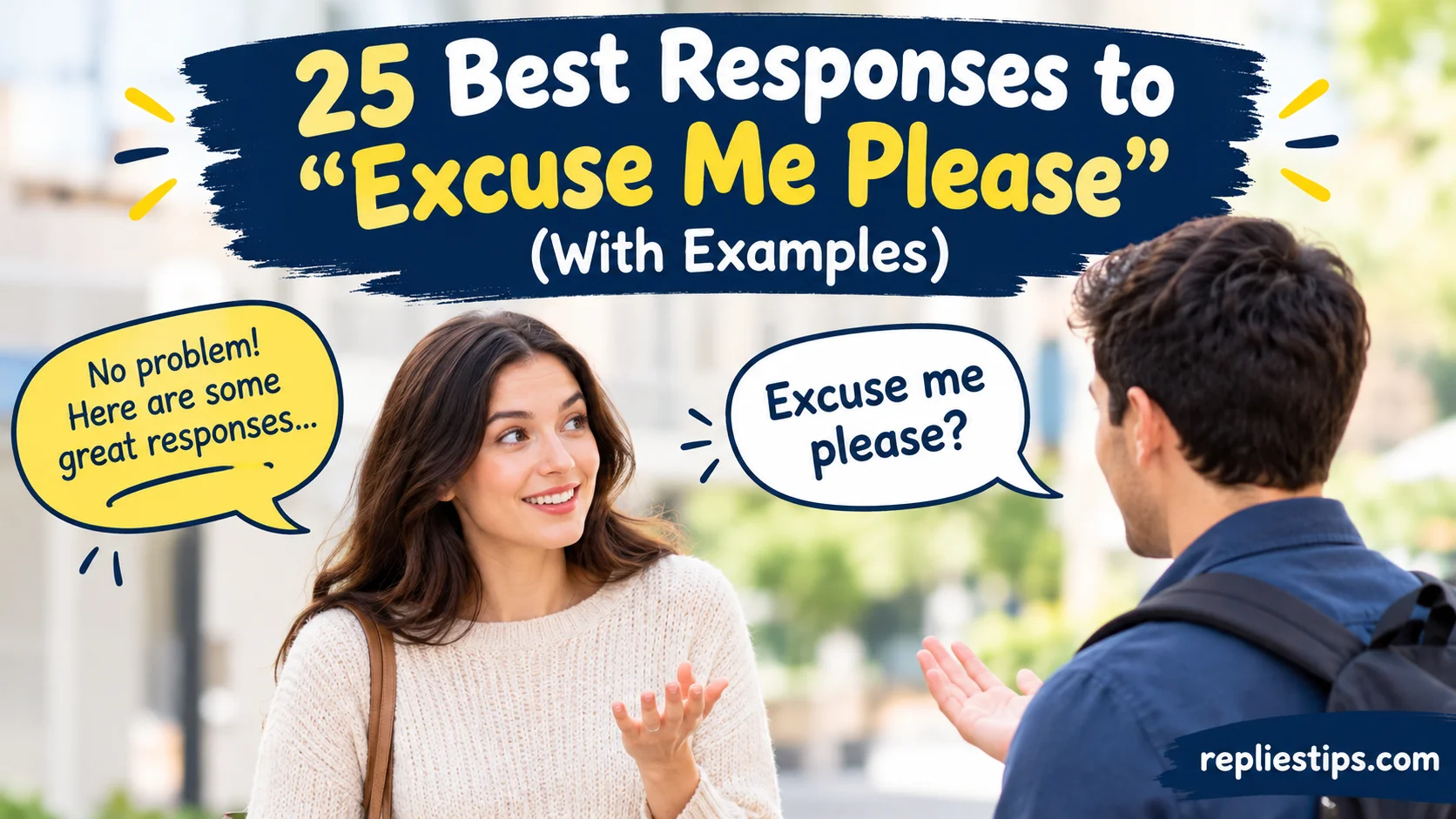
Best Responses to “Excuse Me Please” (With Examples) help you use excuse me naturally in everyday conversations. This common English phrase can have different reasons, such as to get someone’s attention, interrupt politely, move past someone, ask a person a question, or repeat something you didn’t hear. Learning different ways to respond in English makes your speech natural, confident, and respectful in each situation.
In everyday life, excuse me synonyms and useful phrases can help speakers express politeness or request attention. For formal or professional situations, pardon me sounds polite, while may I interrupt works well during a meeting. In casual settings, excuse me can help someone move through a crowded hallway. These phrases also support students, writers, and daily English users in improving vocabulary and making their language smoother.
1. Sure, How Can I Help?
When someone says “Excuse me, please,” responding with “Sure, how can I help?” immediately shows that you’re listening. It works especially well when a stranger, coworker, customer, or acquaintance needs your attention. The phrase feels welcoming without sounding overly formal. It also encourages the other person to explain what they need rather than making them feel rushed. If you’re unsure why they approached you, this is one of the safest and most useful replies.
Meaning: You’re willing to listen or assist.
Tone: Friendly, helpful, and polite.
Example: “Excuse me, please.” — “Sure, how can I help?”
Best use: When someone appears to need assistance.
2. Yes, Of Course
“Yes, of course” is a warm and respectful response that acknowledges the speaker without making the conversation complicated. It’s particularly useful in professional environments, stores, classrooms, and everyday conversations. The phrase communicates openness and cooperation. It can also make you sound confident and approachable when someone interrupts you politely. If the situation is formal, you can say it calmly rather than adding humor or slang.
Meaning: You’re acknowledging them and are ready to respond.
Tone: Polite, warm, and accommodating.
Example: “Excuse me, please.” — “Yes, of course.”
Best use: Professional or courteous everyday interactions.
3. No Problem
“No problem” is a natural response when “excuse me” is being used as a polite interruption or minor apology. It reassures the other person that you aren’t bothered. For example, someone might say “Excuse me, please” after accidentally getting in your way. A relaxed “No problem” keeps the interaction positive. It’s common in casual American English and works well when you want to sound easygoing.
Meaning: You’re saying that their interruption or action is fine.
Tone: Casual, relaxed, and friendly.
Example: “Excuse me, please.” — “No problem.”
Best use: Informal conversations and everyday situations.
4. Of Course, Go Ahead
“Of course, go ahead” is useful when someone wants to speak, ask something, or pass by you. Instead of simply acknowledging them, you give them permission to continue. It sounds welcoming and prevents an awkward pause. This response works especially well when someone approaches you while you’re standing, sitting, working, or waiting somewhere. Your body language can make the response even friendlier.
Meaning: You’re inviting them to continue.
Tone: Welcoming and polite.
Example: “Excuse me, please.” — “Of course, go ahead.”
Best use: When someone wants to ask a question or get your attention.
5. Yes?
Sometimes the best response is simply “Yes?” It’s short, natural, and appropriate when someone says “Excuse me, please” to get your attention. Your tone matters here. A warm “Yes?” sounds attentive, while a sharp or irritated “Yes?” may sound impatient. In a busy public place, this concise response can be more practical than a longer sentence.
Meaning: You’re asking what they need.
Tone: Neutral and attentive.
Example: “Excuse me, please.” — “Yes?”
Best use: Quick conversations when someone is trying to get your attention.
6. Certainly
“Certainly” gives your response a more polished and professional feel. It can be especially appropriate in customer service, business meetings, hotels, offices, or other formal settings. If someone politely asks for your attention, “Certainly” shows that you’re willing to listen or cooperate. It may sound more formal than “Sure,” so consider the relationship and setting before using it in a casual conversation.
Meaning: You’re willing to help or respond.
Tone: Formal, respectful, and professional.
Example: “Excuse me, please.” — “Certainly.”
Best use: Formal and professional situations.
7. What Can I Do for You?
This response goes beyond acknowledgment and directly offers assistance. It’s a strong choice when you’re working in customer service or when someone approaches you because they need help. The wording sounds confident without being cold. It also gives the other person a clear opportunity to explain their request.
Meaning: You’re asking how you can assist them.
Tone: Helpful, professional, and attentive.
Example: “Excuse me, please.” — “What can I do for you?”
Best use: Customer service, workplace conversations, or helping strangers.
8. Absolutely
“Absolutely” is an enthusiastic way to acknowledge someone. Depending on context, it can mean you’re happy to help or agree to what they’re asking. It’s more energetic than simply saying “yes,” which makes it useful when you want to sound positive. In a casual conversation, it can feel natural and friendly.
Meaning: Yes, I’m willing to help or listen.
Tone: Positive, confident, and friendly.
Example: “Excuse me, please.” — “Absolutely.”
Best use: Friendly conversations and helpful interactions.
9. Sure, What’s Up?
“Sure, what’s up?” is an informal response that works well with friends, classmates, coworkers, or people you already know. It invites the speaker to explain why they approached you. Because “what’s up?” is casual, it may not be appropriate for every professional situation. With someone familiar, however, it sounds relaxed and approachable.
Meaning: You’re ready to hear what they want to say.
Tone: Casual and friendly.
Example: “Excuse me, please.” — “Sure, what’s up?”
Best use: Friends and informal conversations.
10. Please, Go Ahead
“Please, go ahead” encourages the person to continue speaking or moving. It’s especially useful when they seem hesitant or are waiting for permission to interrupt you. The phrase is polite without being excessively formal. A calm delivery can make the interaction feel respectful and comfortable.
Meaning: You’re giving them permission to continue.
Tone: Courteous and welcoming.
Example: “Excuse me, please.” — “Please, go ahead.”
Best use: When someone is hesitant to interrupt.
11. I’m Listening
“I’m listening” clearly communicates attention. It can be useful when someone approaches you because they want to explain something or ask a question. The phrase can sound caring when delivered warmly. However, avoid saying it impatiently because that could make it sound like you’re annoyed.
Meaning: You have their attention.
Tone: Attentive, direct, and reassuring.
Example: “Excuse me, please.” — “I’m listening.”
Best use: When someone needs to explain something.
12. How May I Help You?
“How may I help you?” is one of the most professional responses on this list. It’s particularly common in customer-facing roles, offices, reception areas, and formal interactions. The wording demonstrates respect and immediately establishes a helpful tone. It’s a strong choice when you want your response to sound polished.
Meaning: You’re asking how you can assist.
Tone: Professional, courteous, and respectful.
Example: “Excuse me, please.” — “How may I help you?”
Best use: Workplaces, customer service, and formal situations.
13. Yes, Please Tell Me
“Yes, please tell me” gently encourages the person to explain what they need. It’s useful when you don’t want to assume why they’re speaking to you. The response sounds patient and attentive, particularly when the person seems nervous or uncertain about approaching you.
Meaning: You’re inviting them to explain their request.
Tone: Patient, kind, and respectful.
Example: “Excuse me, please.” — “Yes, please tell me.”
Best use: Polite conversations where someone needs your attention.
14. No Need to Apologize
If someone says “excuse me” because they think they have interrupted or inconvenienced you, “No need to apologize” can put them at ease. It reassures them that you aren’t upset. This response is particularly helpful when someone looks embarrassed or worried that they bothered you.
Meaning: You’re telling them that their action was not a problem.
Tone: Reassuring and kind.
Example: “Excuse me, please.” — “No need to apologize.”
Best use: When someone seems embarrassed or apologetic.
15. You’re Fine
“You’re fine” is a simple reassurance that tells someone they haven’t caused a problem. It’s often useful after a small accidental interruption. Keep your tone gentle because the same words can sound dismissive if spoken harshly. With a friendly expression, it can be comforting and natural.
Meaning: You’re saying that everything is okay.
Tone: Reassuring and casual.
Example: “Excuse me, please.” — “You’re fine.”
Best use: Minor interruptions or accidental inconveniences.
Read More: 25 Funny Responses to “Come On Then” (With Examples)
16. Sure Thing
“Sure thing” is a friendly, conversational alternative to “sure.” It sounds relaxed and positive, making it suitable for casual interactions. You might use it when someone politely asks you to move, wait, listen, or help them. It’s less formal than “certainly,” so it works best outside highly professional settings.
Meaning: You’re happy to cooperate.
Tone: Casual, upbeat, and friendly.
Example: “Excuse me, please.” — “Sure thing.”
Best use: Informal everyday conversations.
17. Go Right Ahead
“Go right ahead” gives someone clear permission to continue. It can work when they want to ask you something, pass through, or speak while you’re occupied. The phrase has a natural conversational rhythm and sounds more welcoming than simply saying “yes.”
Meaning: You’re encouraging them to continue.
Tone: Friendly and encouraging.
Example: “Excuse me, please.” — “Go right ahead.”
Best use: Everyday conversations and polite interruptions.
18. I’m Sorry, What Did You Need?
Sometimes “excuse me” is followed by a request that you didn’t hear clearly. In that situation, “I’m sorry, what did you need?” is practical and polite. It shows that you want to understand instead of pretending you heard. This response is especially useful in noisy places or busy conversations.
Meaning: You’re asking them to clarify their request.
Tone: Polite, attentive, and sincere.
Example: “Excuse me, please.” — “I’m sorry, what did you need?”
Best use: When you didn’t hear or understand the person.
19. Yes, What’s the Matter?
This response is best when the speaker sounds concerned or approaches you unexpectedly. It gives them space to explain what happened. However, “what’s the matter?” can sound serious, so use it when the context suggests that something may actually be wrong.
Meaning: You’re asking what they need or what happened.
Tone: Concerned and attentive.
Example: “Excuse me, please.” — “Yes, what’s the matter?”
Best use: When someone appears concerned or needs urgent attention.
20. Certainly, Please Continue
“Certainly, please continue” combines politeness with encouragement. It’s a particularly good choice for meetings, interviews, presentations, and other structured conversations. It tells the speaker that they have your attention and that you’re ready to hear the rest of what they want to say.
Meaning: You’re giving them permission to continue speaking.
Tone: Formal, attentive, and respectful.
Example: “Excuse me, please.” — “Certainly, please continue.”
Best use: Professional or formal conversations.
21. Of Course, Take Your Time
If someone seems nervous or hesitant, “Of course, take your time” creates a relaxed atmosphere. It tells them they don’t need to rush their explanation. This response works particularly well when someone is trying to ask for help or explain a situation carefully.
Meaning: They can speak without feeling rushed.
Tone: Patient, supportive, and friendly.
Example: “Excuse me, please.” — “Of course, take your time.”
Best use: When someone seems nervous, hesitant, or unsure.
22. No Worries
“No worries” is a casual phrase that reassures someone that their interruption or mistake isn’t a big deal. It’s common in relaxed everyday English. If you’re speaking with a friend, coworker, or stranger in an informal setting, it can make the interaction feel easygoing.
Meaning: Everything is okay.
Tone: Relaxed, friendly, and informal.
Example: “Excuse me, please.” — “No worries.”
Best use: Casual conversations and minor interruptions.
23. Happy to Help
“Happy to help” is a positive response when someone is asking for assistance. It communicates genuine willingness rather than merely tolerating the request. In professional situations, it can create a warm customer-service experience. In personal conversations, it shows generosity and friendliness.
Meaning: You’re glad to assist them.
Tone: Warm, positive, and helpful.
Example: “Excuse me, please.” — “Happy to help.”
Best use: Helping someone with a request or question.
24. What’s Going On?
“What’s going on?” is more casual and direct. It works best when you know the person or when the situation is informal. It can show curiosity and concern, but context matters. If a stranger simply wants directions, “How can I help?” would usually sound more appropriate.
Meaning: You’re asking what they need or what is happening.
Tone: Casual, curious, or concerned.
Example: “Excuse me, please.” — “What’s going on?”
Best use: Friends, familiar coworkers, or informal situations.
25. Certainly, How Can I Assist?
“Certainly, how can I assist?” is one of the most polished responses to “excuse me, please.” It’s ideal when you want to sound professional, respectful, and service-oriented. You might hear this style of response in offices, hotels, reception desks, stores, or formal customer interactions. It acknowledges the person while immediately offering assistance.
Meaning: You’re respectfully asking how you can help.
Tone: Professional, courteous, and polished.
Example: “Excuse me, please.” — “Certainly, how can I assist?”
Best use: Formal workplaces and customer-service situations.
FAQs:
What is the best response to “Excuse me, please”?
A safe response is “Sure, how can I help?” It’s polite, friendly, and appropriate in most everyday situations.
How do you respond to “Excuse me” politely?
You can say “Yes?”, “Of course, go ahead,” or “How may I help you?” Choose the response according to the situation and your relationship with the speaker.
Is “No problem” a good response to “Excuse me”?
Yes. “No problem” works well when the person is apologizing for interrupting, bumping into you, or causing a minor inconvenience.
What is a professional response to “Excuse me, please”?
“How may I help you?” or “Certainly, how can I assist?” are excellent professional responses because they sound respectful and attentive.
What can I say if someone says “Excuse me” to get my attention?
You can simply say “Yes?” or “Sure, what’s up?” if the situation is casual. If you’re unsure what they want, “How can I help?” is a reliable choice.
Conclusion:
Knowing how to respond to “Excuse me, please” helps you handle everyday conversations with confidence and good manners. The right reply depends on the situation, relationship, and tone. For most situations, “Sure, how can I help?” is a natural choice, while “How may I help you?” works better in formal settings.
Whether you choose a friendly, professional, reassuring, or casual response, the goal is simple: acknowledge the person and make the conversation comfortable.





1 thought on “25 Best Responses to “Excuse Me Please” (With Examples)”